What actually goes on your house
Permanent lights are a color matched aluminum channel under your roof edge, LED lights seated inside it, and one controller indoors, installed once and run from your phone. Permanent Lighting Solutions sells these permanent LED house lights across Nashville and Middle Tennessee, and our licensed, insured and certified installers fit them. By day the install all but vanishes.
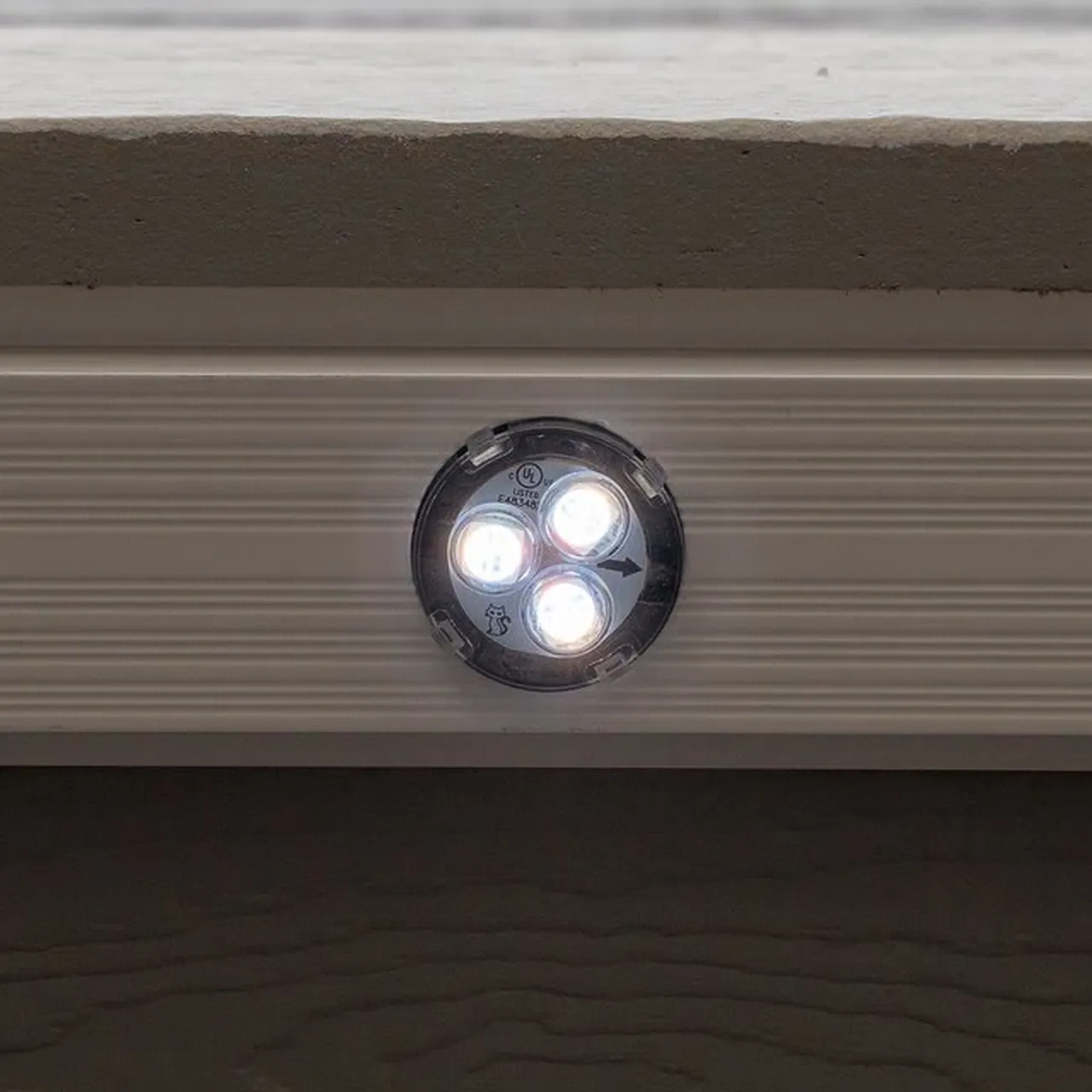
A light with three LEDs inside
This is one light from a run, close up. There is no bulb to change: it sits down inside the channel.
Each LED carries four color diodes, and their mix is where millions of colors come from, warm white included. Picking one is a job for the app that drives them.
Each light is 72 lumens and 0.96 watts, among the brightest permanent lights made.
| Fact | Figure |
|---|---|
| Light output | 72 lumens |
| Power draw | 0.96 watts |
| Colors | Over 16,000,000 colors |
| Lifespan | Roughly 50,000 hours on the brightest setting, bright white |
| Safety testing | UL rated, tested by outside companies |
The eave track that is actually attached
The channel is aluminum, it runs along the fascia or soffit, and it is the only piece fixed to the house. The lights sit inside it facing down, so you see the light and never the fitting. On a Nashville roofline, this channel and the lights inside it are what roofline lighting actually is.
It comes in three profiles, and the structure under your roof edge decides which one you get. The system our installers put up is Bosso, the only one we use. The FAQ covers what the channel is made of and how it is fixed on.
More roofline means more channel, which is why a longer roofline costs more.
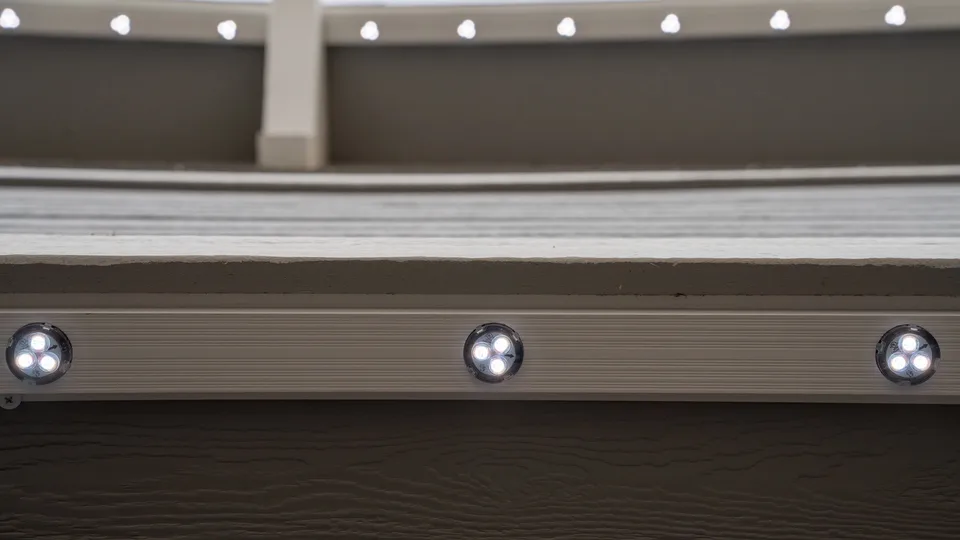
Hardware hidden by day, and it increases curb appeal by night.
A corner is cut and fitted, not bent
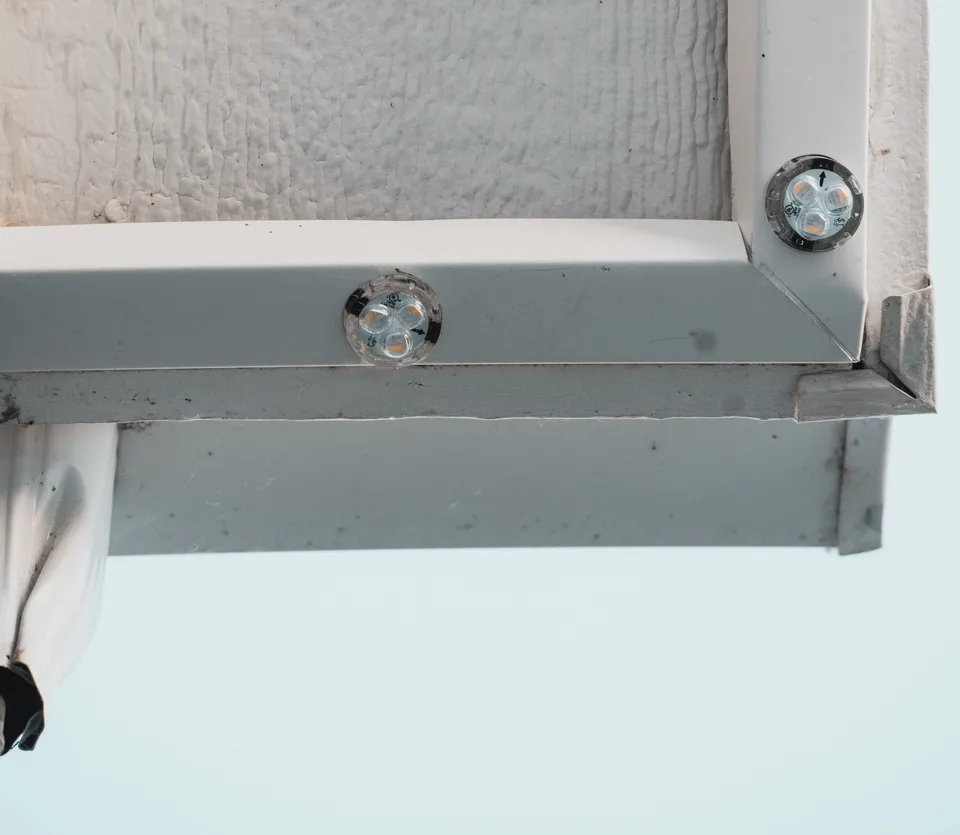
Where the roof turns, the channel is mitered: cut to that corner's own angle and joined on the cut. Bent channel kinks, throws the lights out of line, and once you see it you cannot stop seeing it.
Mitering takes longer than bending, and it is part of what makes one house cost more than the next.
Even the whole way down the run
The lights are set at a fixed spacing when the run is made, not judged from a ladder. The gap between the first two is the gap between the last two.
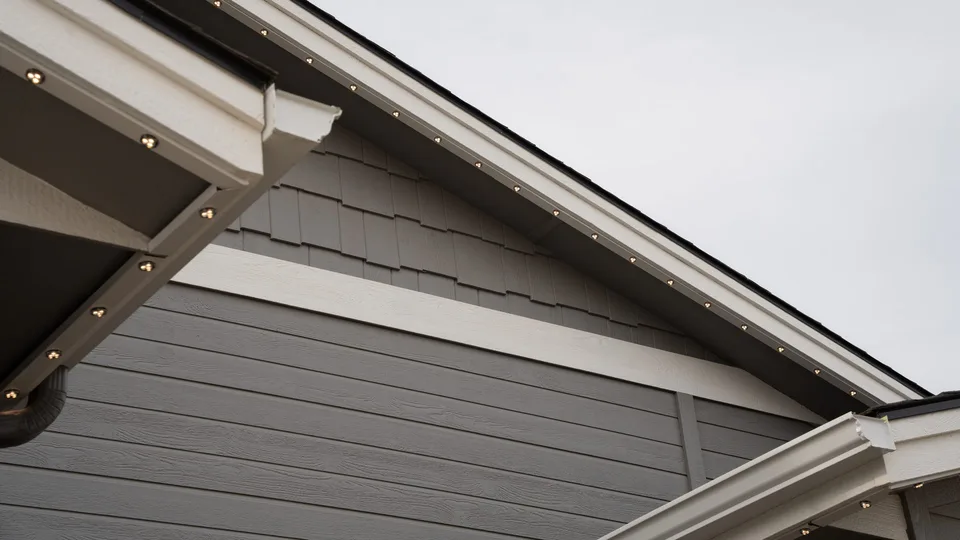
The question under the spacing is usually the count, and the FAQ has how many lights a roofline like yours takes.
Every roofline is different. Find out what yours would take.
What to look for before you commit
Not every system is built the same way. A few things are worth checking before you choose one, wherever you buy it:
- How it's mounted. Look for a channel fixed under the roof edge, not lights stuck or taped to the surface.
- A low-profile channel, color matched to your trim. Some installers call it a track. Matched to the fascia and soffit, it reads as part of the roofline by day instead of something added to it.
- Zones and presets. Different parts of the house should be able to run different scenes at the same time.
- An app, not a wall switch. Look for zones, schedules and color control on your phone, not just a single on/off switch.
- Built for year-round use. It should be built to stay outside through every season, not something you would expect to take down every fall. The U.S. Department of Energy puts the useful life of good-quality white LED lighting at 30,000 to 50,000 hours or longer.
- How the run handles corners and gables. Look for a corner that is cut and mitered to fit, not bent or forced into place.
Whatever you compare it to, a system is easiest to judge on your own roofline. The estimate is free.
Matched to the trim it sits under
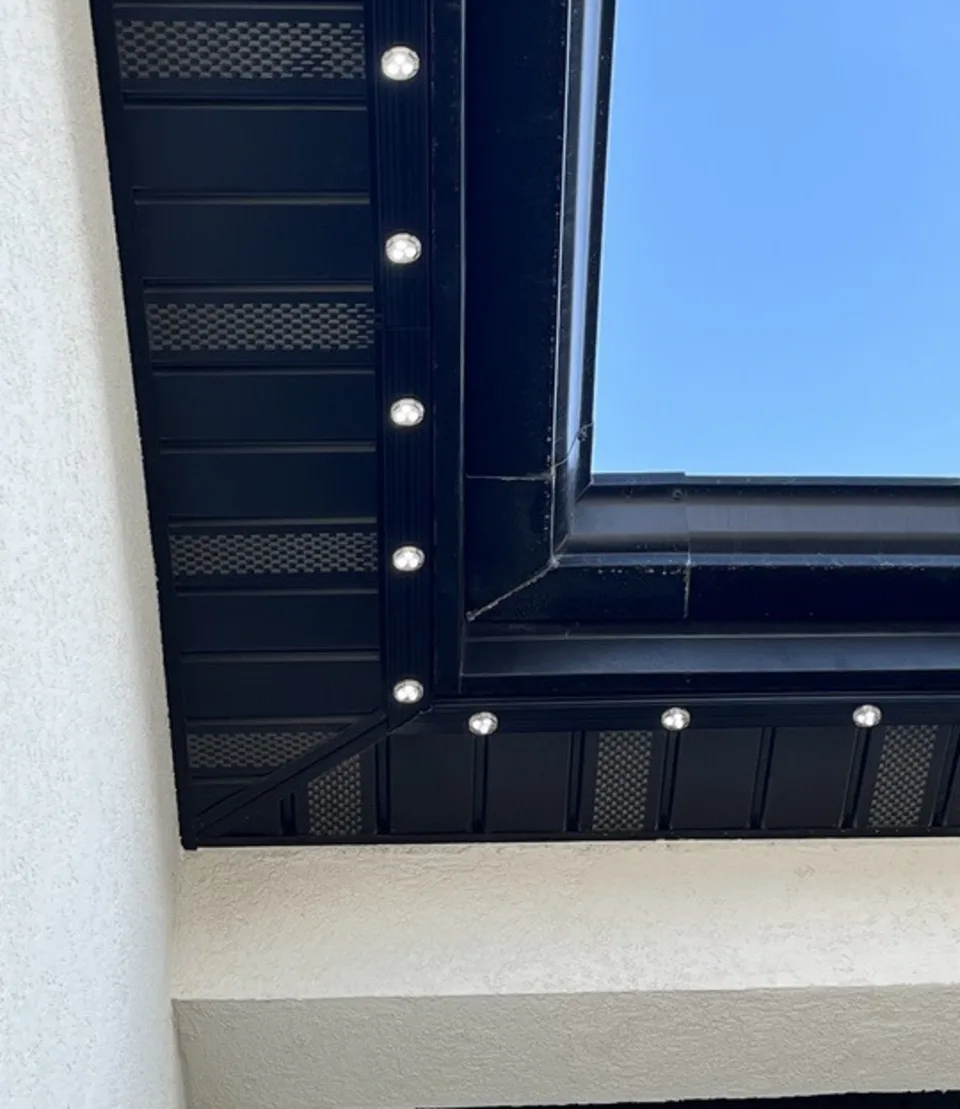
The channel is custom color matched to every home before it goes up: dark bronze under a dark soffit, white under white trim. Your eye reads it as part of the roof edge, not as something added to it.
Look at the soffit in this frame, then find where the channel stops. If you are wondering whether it will match your own trim, the FAQ explains how the channel is matched to your roof and trim.
With the lights off, it is a line under the roof edge
This is what eave lighting shows during the day:
- Nothing on the face of the house
- Nothing on the roof
- No cords, no gutter clips, no box outside
This is late sun, from the angle a neighbor walks past at: the install reads as one low-profile line under the roof edge. The FAQ has what it looks like at noon.
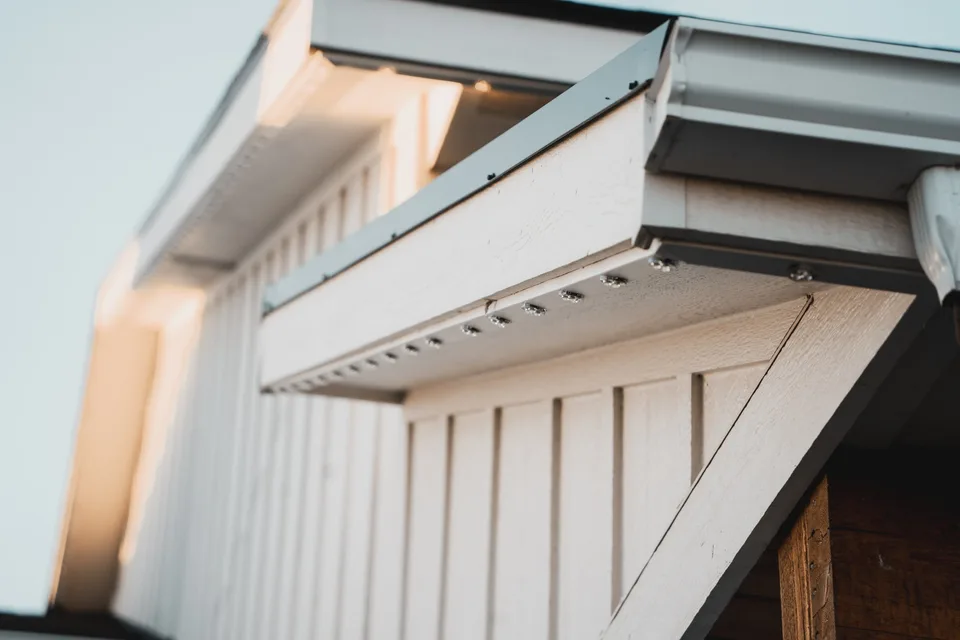
One installation, every holiday. It stays up and stays out of sight.
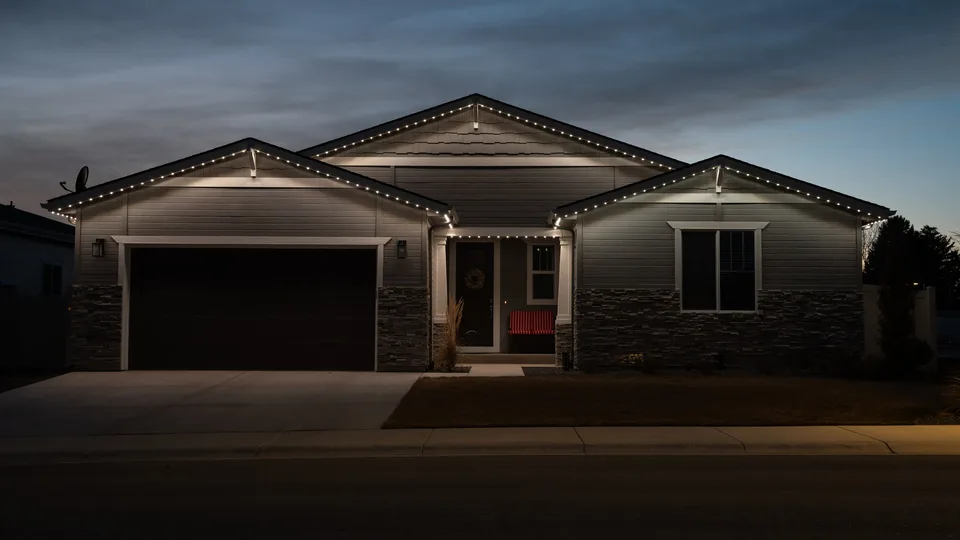
The same house, after dark
The rake board in the Spacing photos above is this same roof edge, by day. Nothing is added for the night and nothing comes down after the holidays.
Included with every install, and set up for you
Every system comes with a programmable controller. The installers mount it indoors, usually in the garage or a utility room with power and wifi, and program it before they leave.
- Nothing outside: no box on the siding, no timer by the door
- Up to 8 zones on one controller, so the front, a patio and a garage can each do something different
- Up to 4 controllers on one account, for a house with more roofline than one can carry
If you would rather it went somewhere else, where the box goes is settled at the measure.
Zones, schedules and voice control live on your phone, in the app that runs them.
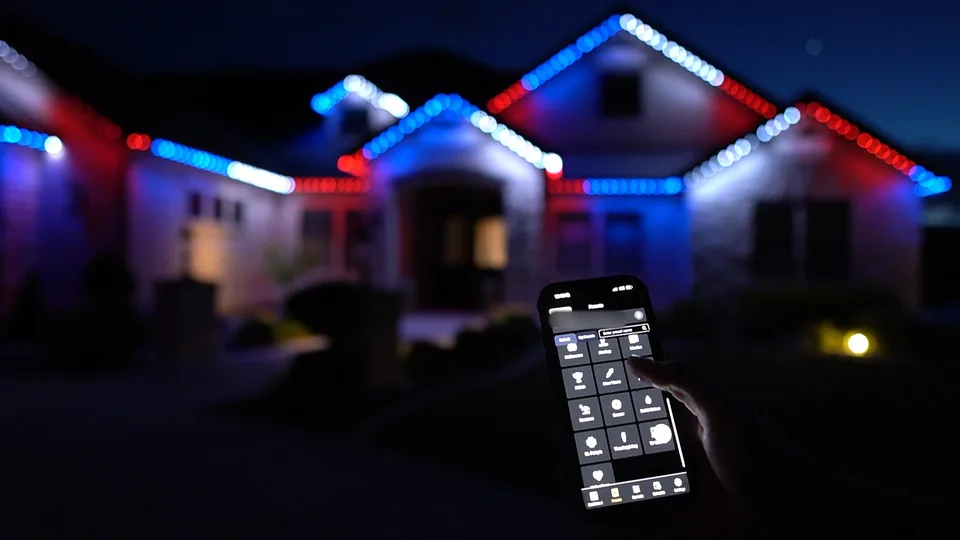
The controller comes with every install. Our installers set it up, you pick the colors.
Have a long roofline? See how zones and controllers work on a large home.
Close enough to count them
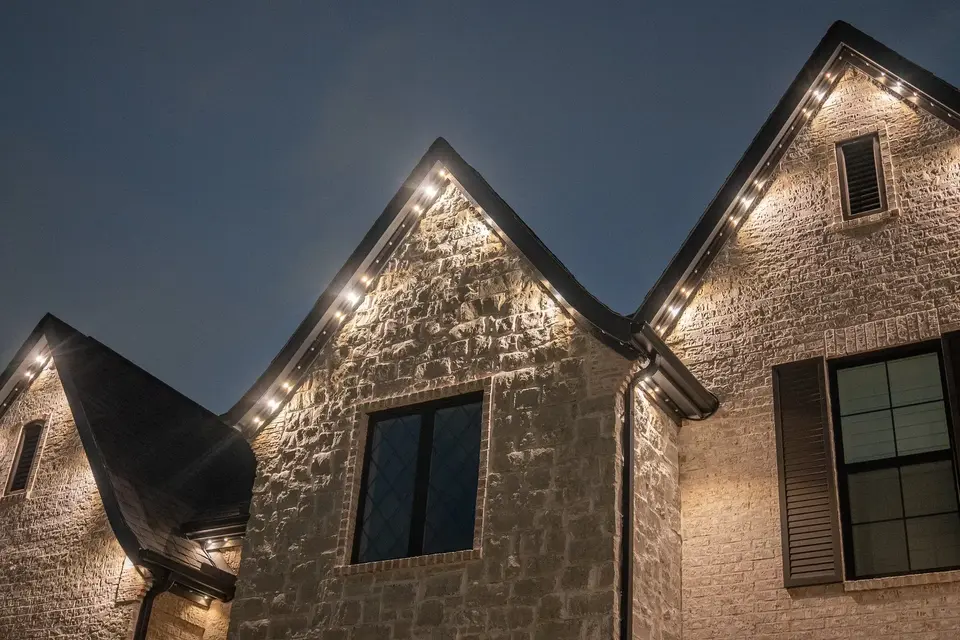
The same lights, seated in the channel on a gable at night. From the street they read as one clean line; up close, you can count every one.
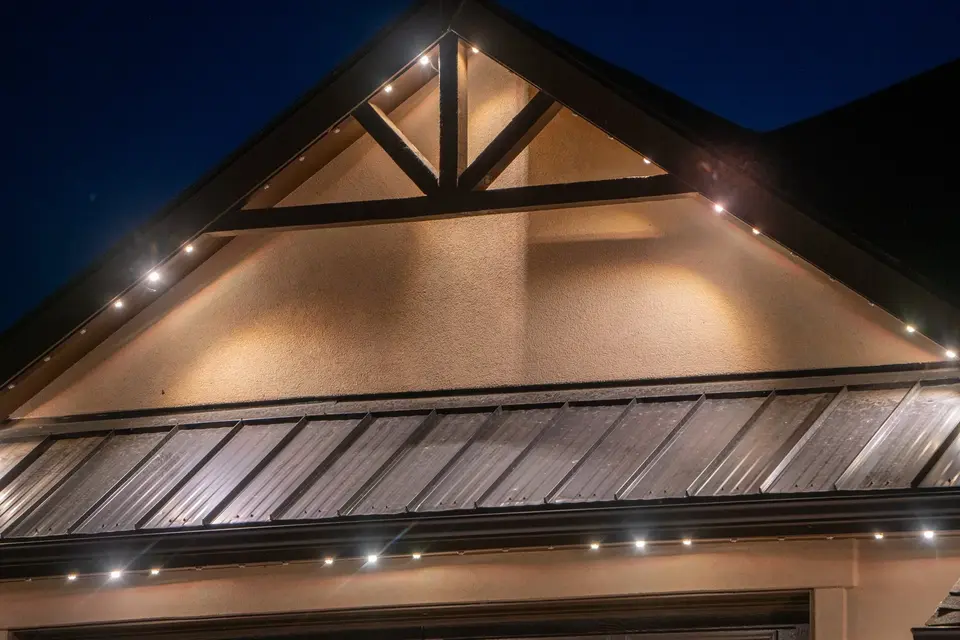
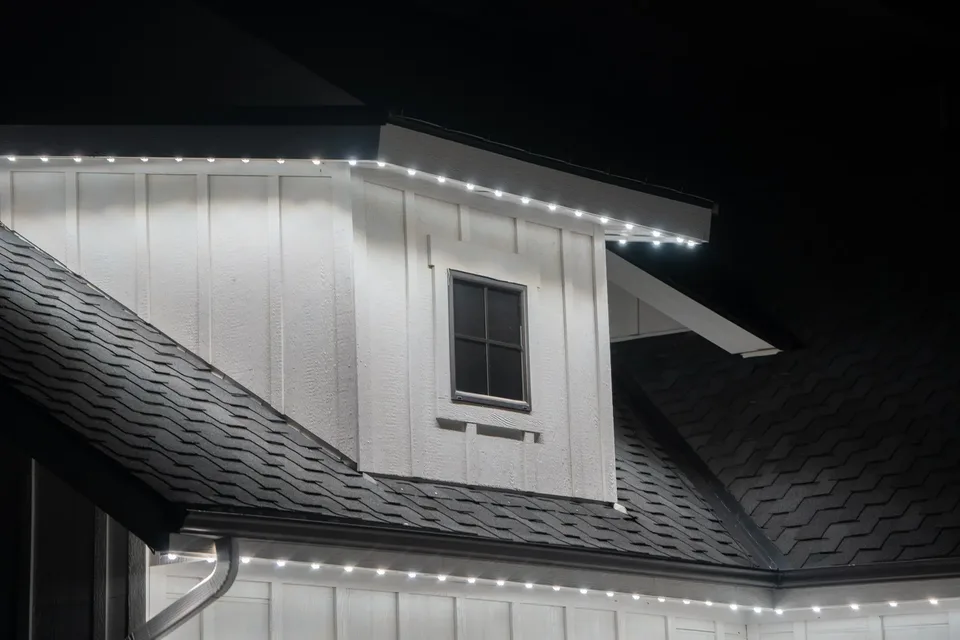
Millions of colors, and lights that last 50,000 hours. One installation.
What the work actually looks like
Most of it happens at the roof edge, and the slow part is the part nobody watches: a straight run, clean corners, joints where they belong.
- Before the dayThe roofline is measured, and the channel is cut and colored to your house so it arrives ready to fit.
- On the dayOur licensed, insured installers put the channel up under the roof edge, join the runs, and mount and wire the controller indoors.
- Before the installers leaveThe zones are set, the system is running, the app is ready, and the ladders and offcuts go with the installers.
The whole sequence, in order, is on how permanent lights are installed, step by step.
How long does installation take?
Installation takes 8 to 10 hours on an average roofline, and the goal is to be done within 1 to 2 weeks of the deposit. Your own number comes from the free roofline walkthrough.
What will it add to your power bill?
Each light draws under a watt, and an average system runs about 250 of them, so a full house at full output lands close to the draw of five household light bulbs, and it draws less than that most nights once the app dims the display on schedule. The FAQ walks through the running-cost math. For your own roofline, see the kWh a Nashville roofline uses each night.
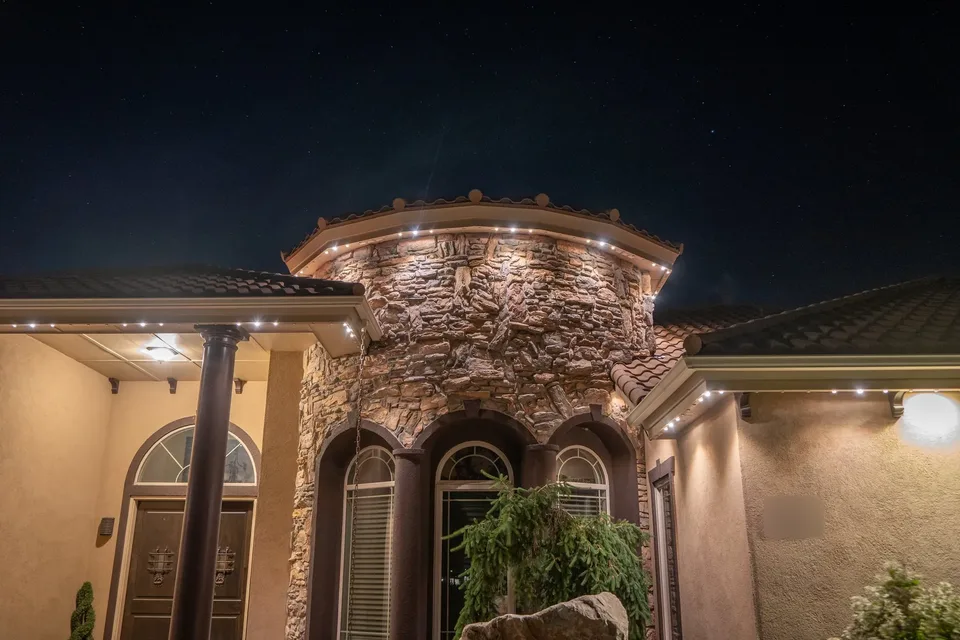
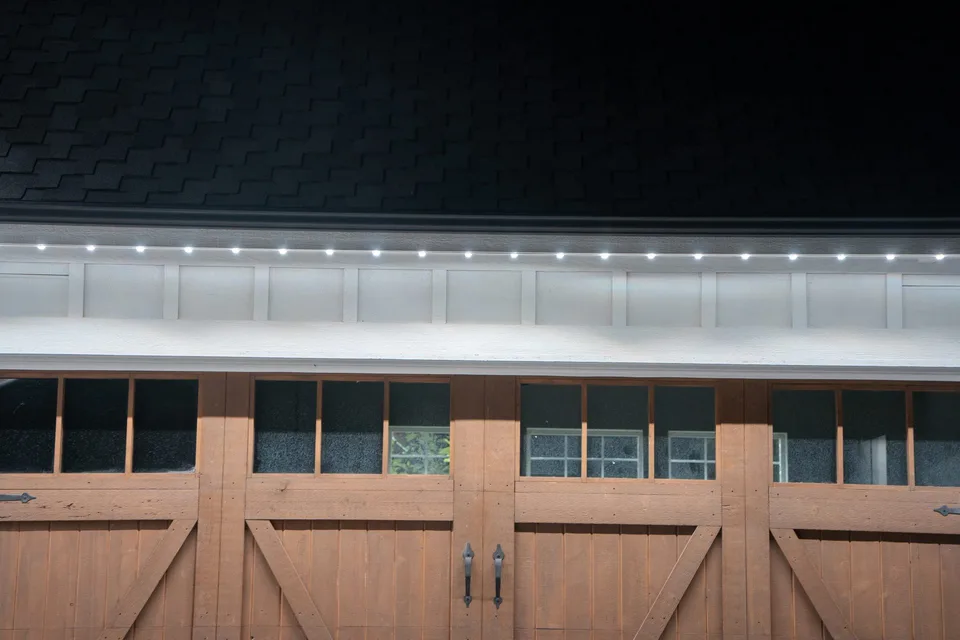
The channel is mounted along the fascia or soffit, and no fastener goes through the gutter or through the roof surface. The FAQ has the full answer on the roof and gutters.
The main roof is not the only edge
A covered patio has a roof edge too, and so do a porch and a detached garage. The same channel follows them, and all of it answers to the same controller.
It turns a patio into a room you can light any evening, which people use far more than the holidays. It can also run along a pergola, a column or a soffit. See where else it can go besides the roofline. For how roofline light works alongside path, wall and landscape lights, see our roofline and landscape lighting comparison and a guide to exterior accent lighting.
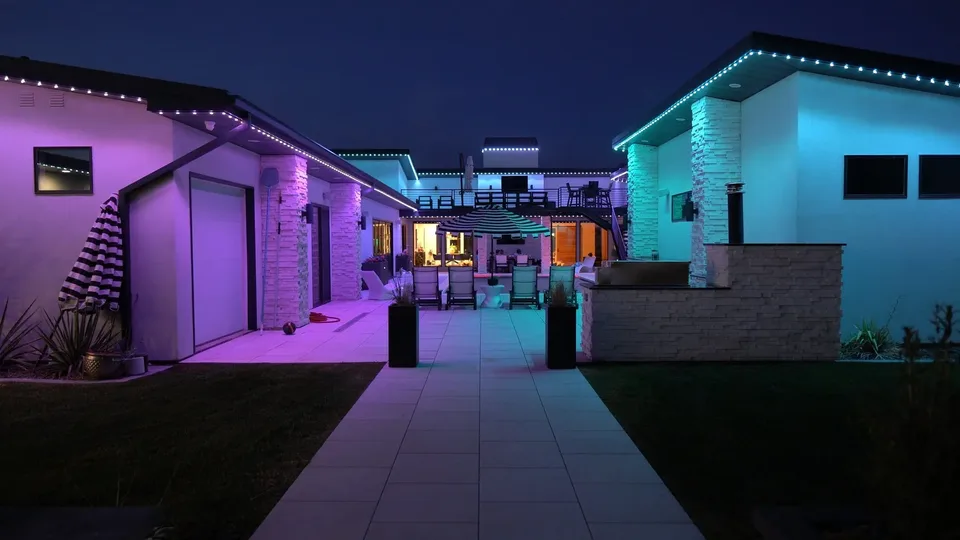
No more ladders. Find out what your house would look like lit.
Three parts, built to stay out of sight
- The channelAluminum, color matched to your trim, mounted along the fascia or soffit.
- The lightsThree LEDs each, seated down inside the channel.
- The controllerIncluded with every install, mounted indoors and set up for you.
Backed by the manufacturer's 5-year product warranty and our installers' workmanship warranty.
For the long version, read what is covered if something fails.
Still wondering about something? Read the FAQ.