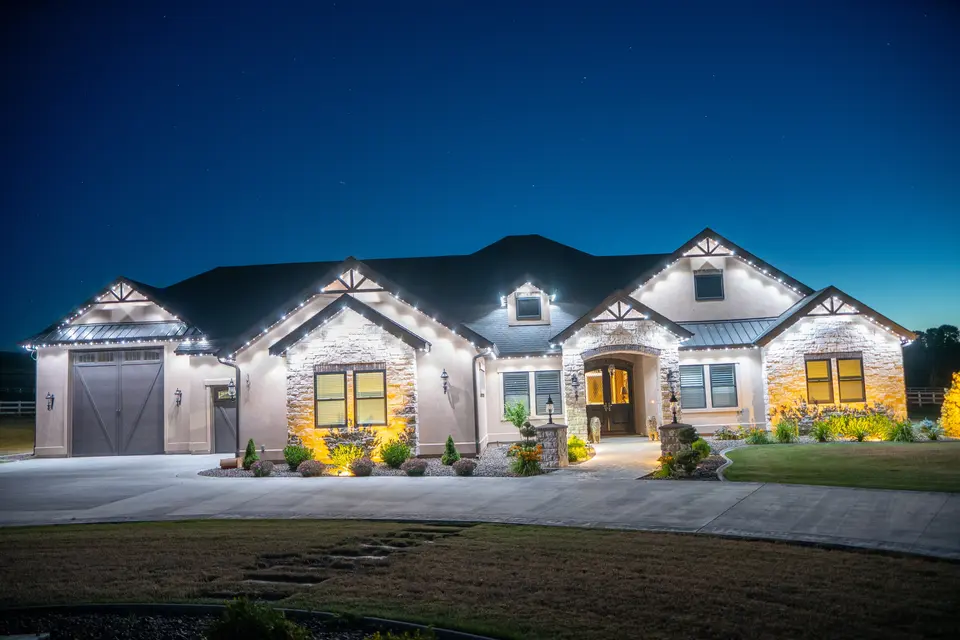
What is covered, and what you have to do
Backed by the manufacturer's 5-year product warranty and our installers' workmanship warranty.
Once they are up, they stay up. The lights are rated for roughly 50,000 hours, and the only upkeep is a rinse when you do the gutters.
How long do permanent lights last?
Rated for roughly 50,000 hours of use; what that means in years depends on how many hours a night you run them, and the FAQ does that math.
That figure is measured on the brightest setting, full bright white.
Bright white is the hardest the lights ever work. Color draws less, so a house that spends most of the year in color runs easier than the rating assumes.
Weighing this against a DIY kit instead? See what actually holds up over time on each one.
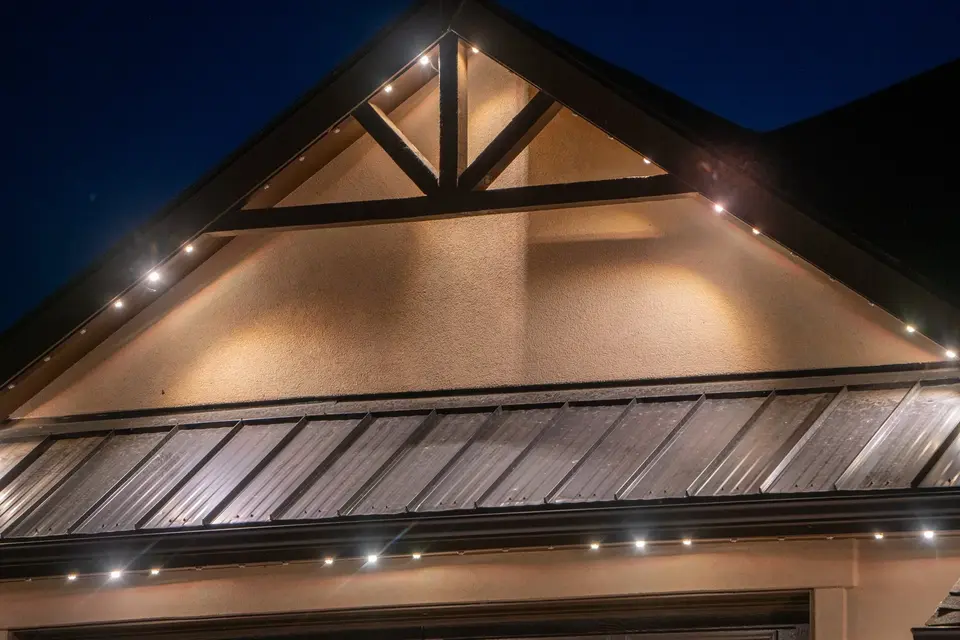
50,000 hours is a lot of nights.
Does permanent lighting hold up in Nashville ice and storms?
Yes. Every component is UL rated and tested by outside companies, and the lights sit inside the channel under the roof edge, so water runs off the roof as it always has.
Nashville throws the full set at a roofline. A January that freezes and thaws in the same week, April pollen that coats everything green, July storms, and heat that sits on the roof all August.
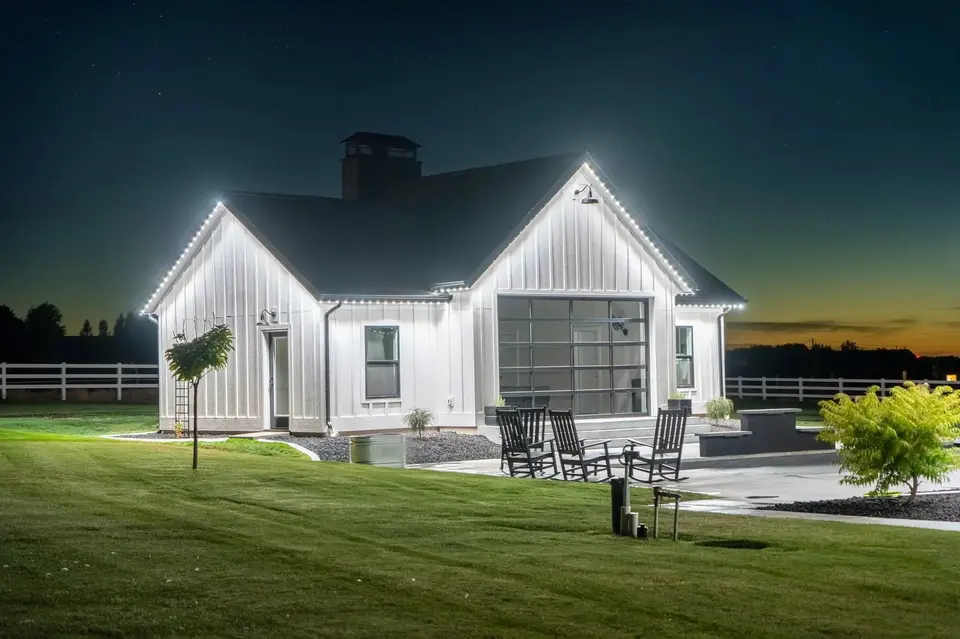
Storm on the way? Leave them up.
Get A Free Lighting EstimateAlmost nothing to maintain
Rinse them when you rinse the gutters. That is the whole routine, and the only reason for it is that a Nashville spring of pollen and a summer of dust will dull anything under a roof edge.
Nothing comes down in January. No boxes carried to the back of the garage, no untangling next November, no ladder off the wall. The lights stay where they were mounted, and when they are off you cannot see them from the street.
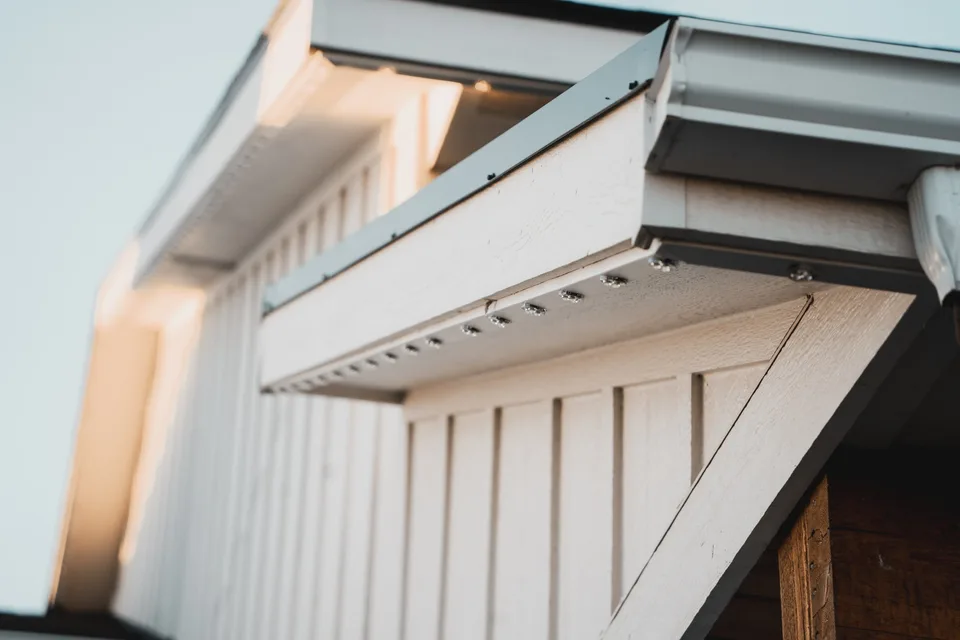
Hang up the ladder for good.
One light out does not take the run with it
Every light in the channel is its own point. If one fails, the rest of the run stays lit, and so do the corner, the gable and the far side of the house. What you see is one dark spot in a line that is otherwise doing exactly what it did the night before.
Tell us where it is and we get back to you. A photo from the driveway with the system on is usually enough for the installers to know which run and roughly where, so the first trip out is not a trip to look.
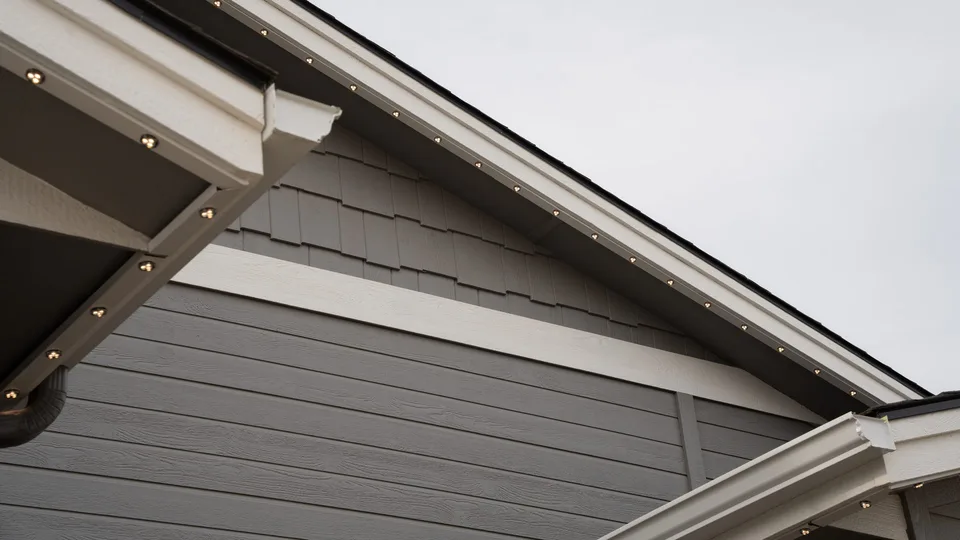
One light out is one light, never a dark roofline.
Get A Free Lighting EstimateNothing goes through your shingles
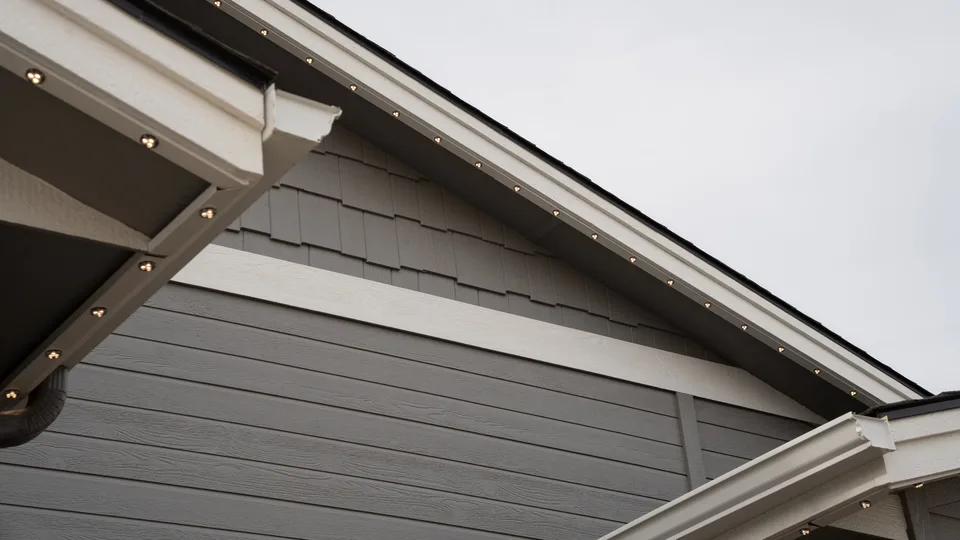
The channel mounts under the soffit or on the fascia, the boards that face you from the ground. It stays off the surfaces that keep water off the house.
Gutters and the roof edge do a real job up there. So no fastener goes through the gutter, and the run follows the roof edge instead of climbing onto it.
The gutter has its own page: where the channel goes instead of the gutter.
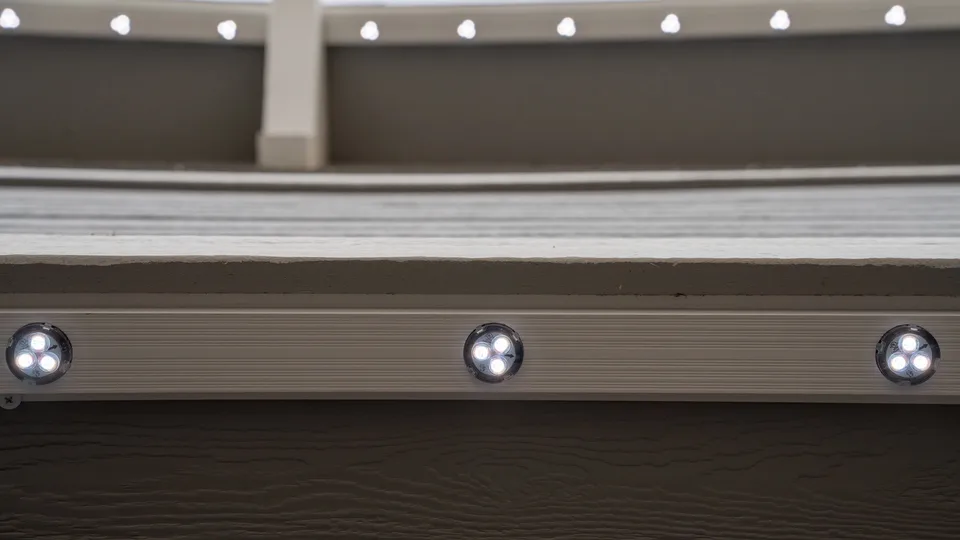
All the light, and not one hole in your shingles.
The whole roofline lit on 240 watts
Each light draws 0.96 W, and an average system has 250 of them. With every light on at full brightness, that comes to 240 W.
- 0.96 Wper light
- 250lights in an average system
- 240 Wevery light on, full brightness0.96 W × 250
And that is the top of the range. Color draws less than bright white, most systems sit well under every light on, and the system is off for the hours nobody is looking at it. If your roofline runs longer or shorter than 250 lights, the same math works for yours.
On the power bill, it adds very little. The numbers are worked out in kWh per night and per year for 100, 150 and 200 foot rooflines. And if you want the roofline lit until sunrise, you can leave them on all night, every night.
See what that looks like on your roofline.
Get A Free Lighting Estimate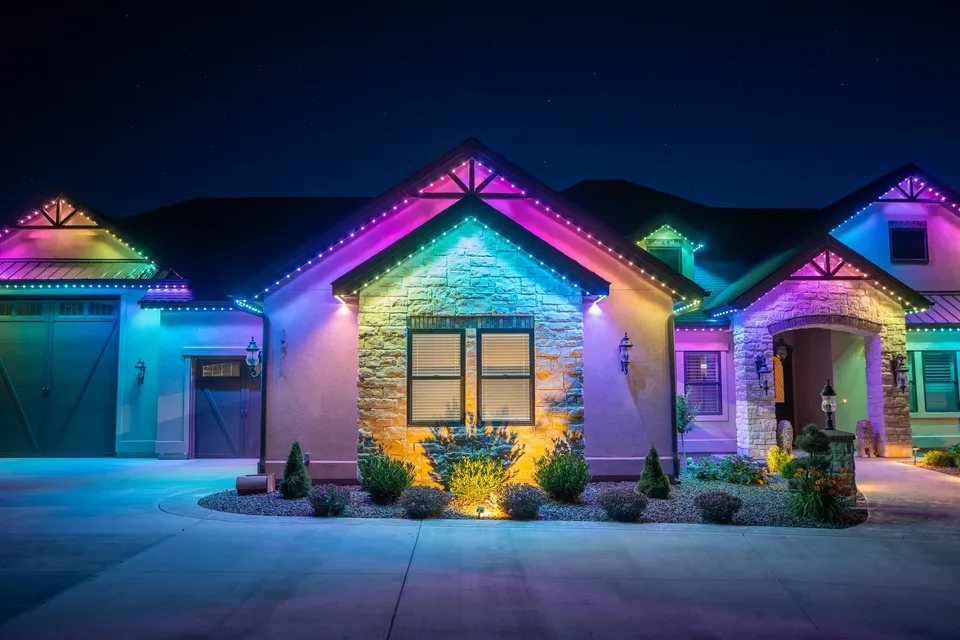
Now picture it on your house
How much channel your house takes, where the runs start and stop, which edges are worth lighting: the installers come out, measure it, and tell you what it comes to, one price with the install included.
Licensed, insured and certified installers.