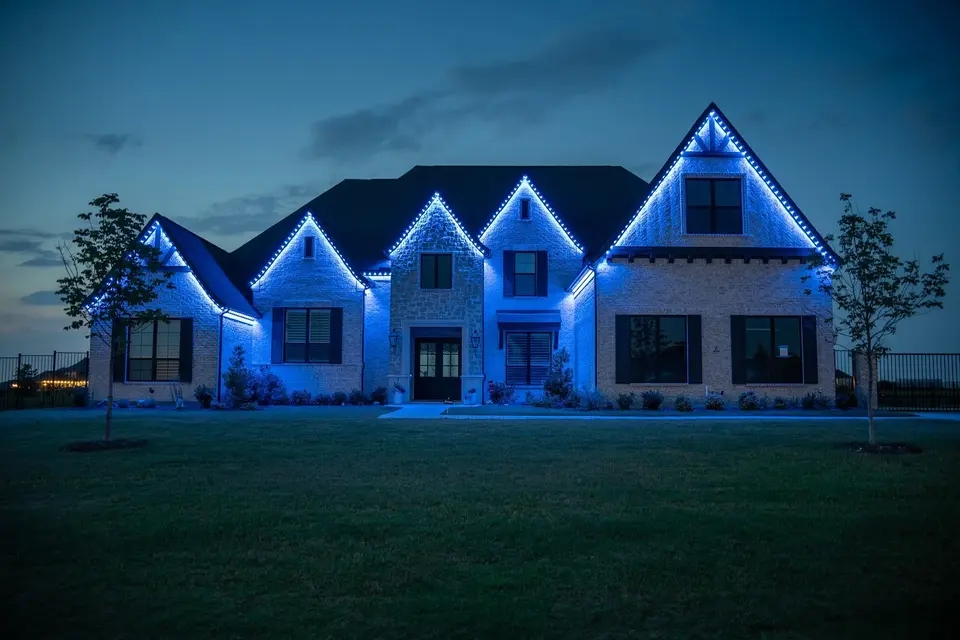
Permanent lighting colors Color does not have to mean loud.
Most nights your roofline wears a warm white that makes the whole house look finished. On the nights you want more, the same lights hold millions of colors, and you change them from your phone. Nothing new goes up and nobody gets on a ladder.
Most evenings it is warm white, and the house looks finished
Warm white along the eaves and gables reads as part of the architecture, not as something hung on it. It is the setting the installers hand your house over on, running on a schedule, so it comes on at dusk every night without you thinking about it.
Color is there for the nights you want it. If you never touch it, you still bought the right lights, and the FAQ says why under do I have to use the colors.
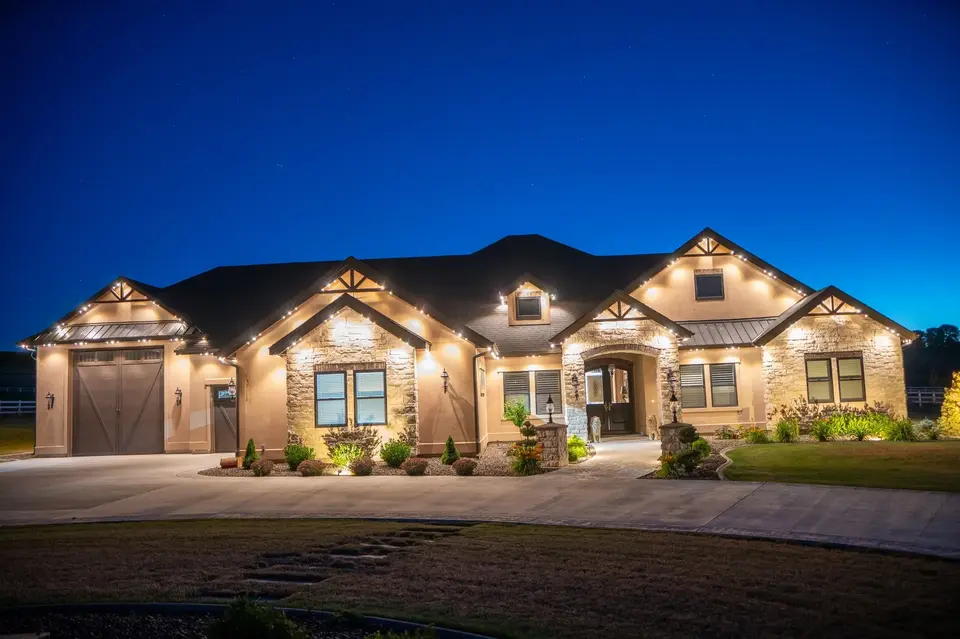
Warm or cool, and you can change your mind tonight
Warm white behaves like lamplight. It flatters brick, stone and anything with a yellow in it, and it makes the front of a house feel lived in. Cool white behaves like moonlight. It holds a crisp edge against white trim, gray stone and black window frames, and reads more like architectural lighting than decoration.
Neither costs more and neither is the upgrade. Pick the one that suits the house you have, and if you change your mind later it is a tap in the app, not a service call. The FAQ entry on warm white or cool white goes further into how to choose. For our plain explainer on color temperature and RGBW, see Permanent LED Lighting Explained.
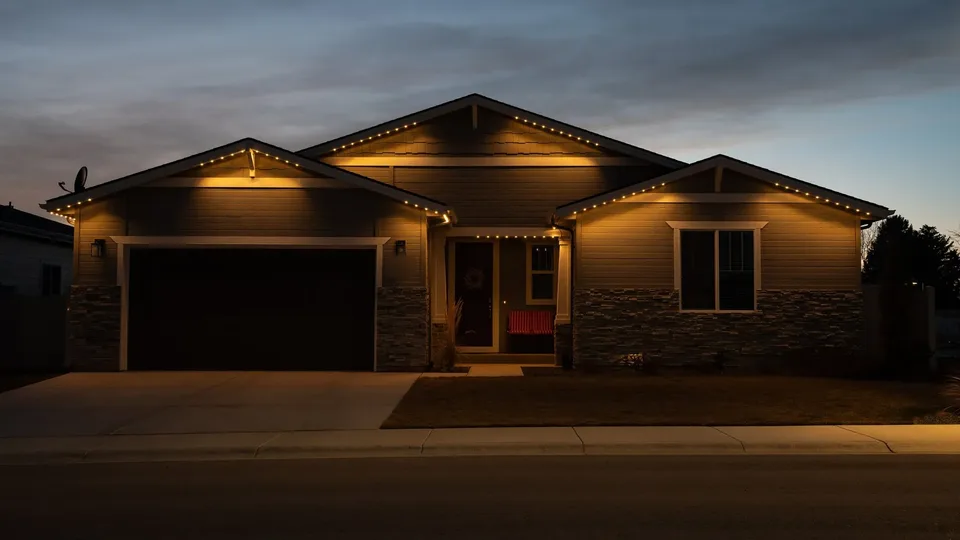
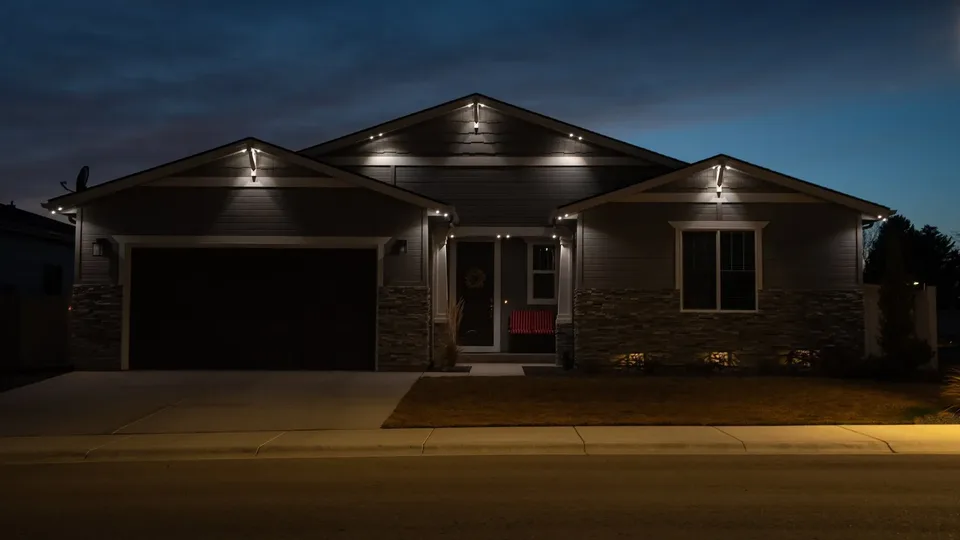
Pick a white
Both whites come out of the same lights, so choosing one now never locks you out of the other.
White draws your house in clean lines
Up close you can pick out single lights. From across the street you see one continuous line, and white keeps that line reading as part of the building instead of as something strung along it.
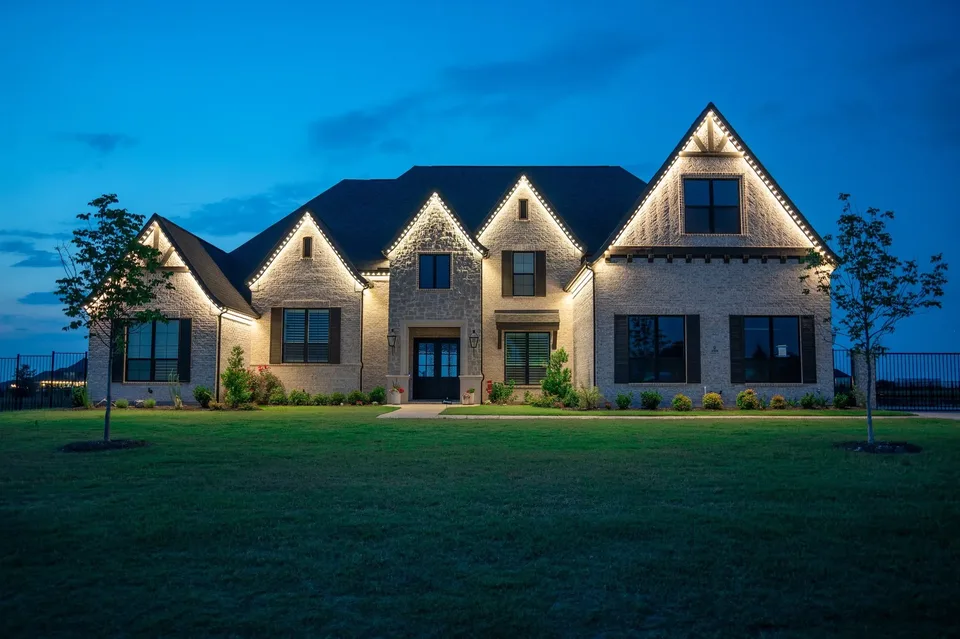
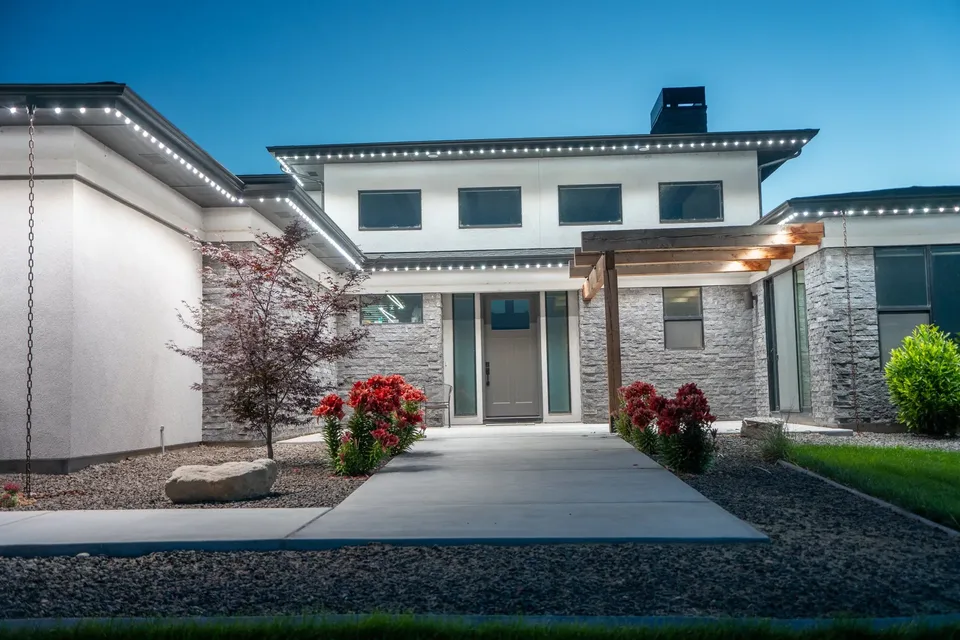
A steep roof and a low one want different runs. That gets worked out on your actual house at the free estimate, not guessed at from a page.
This is what changing a color actually looks like
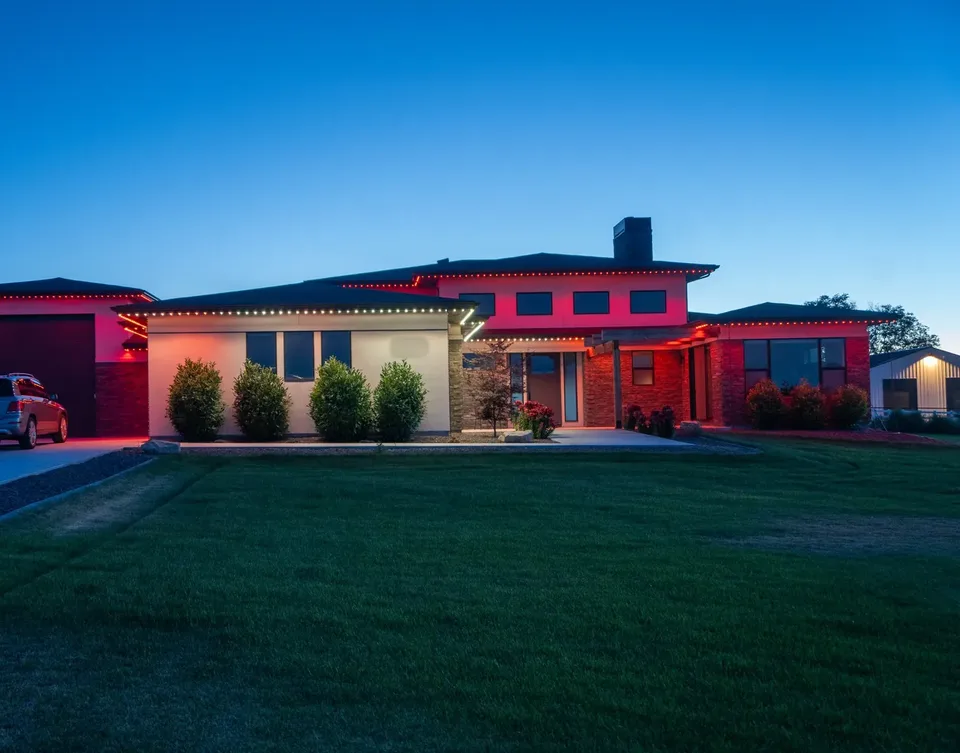
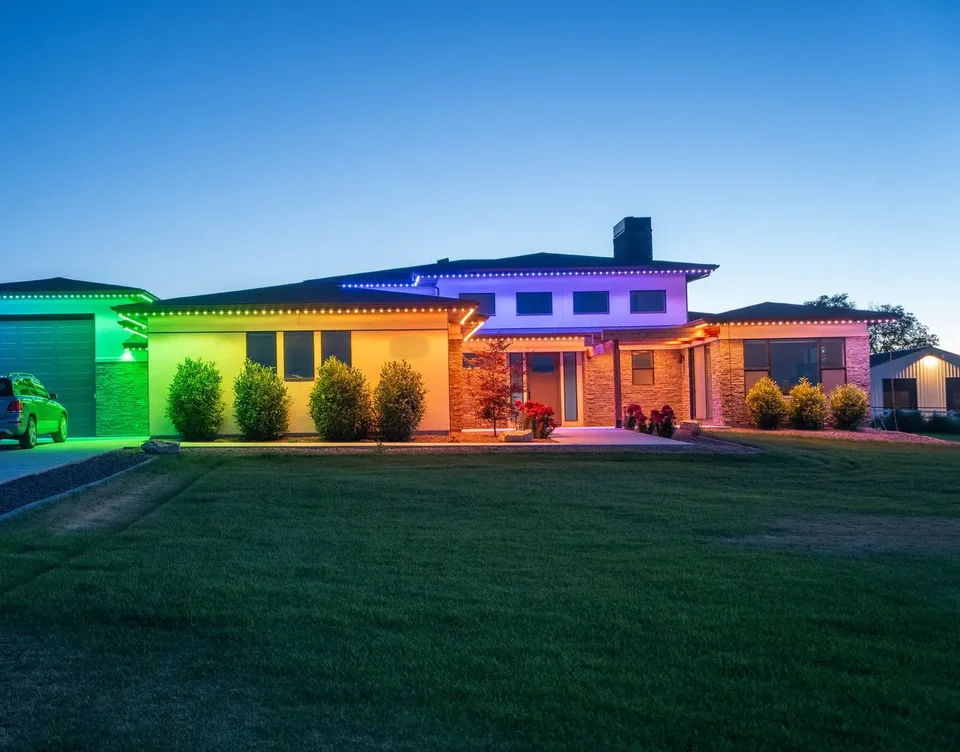
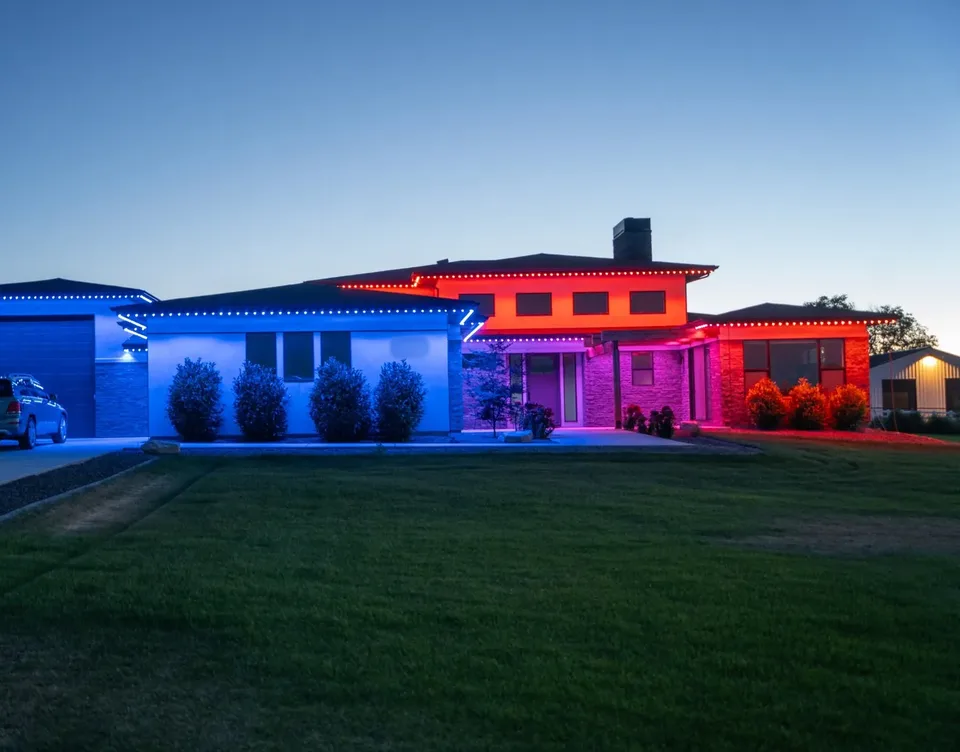
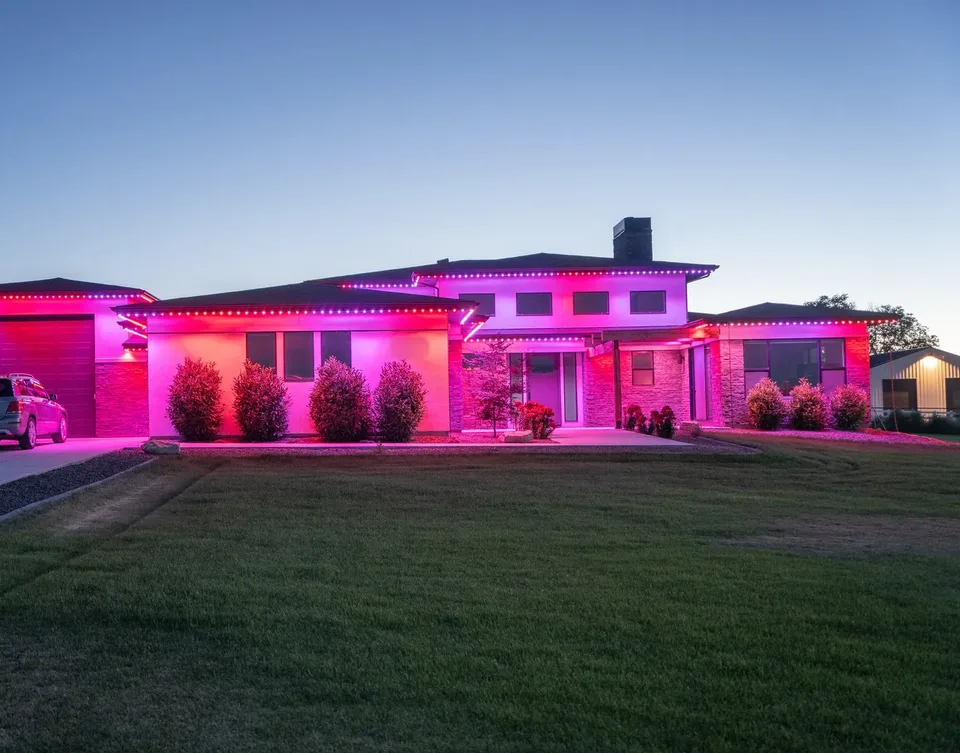
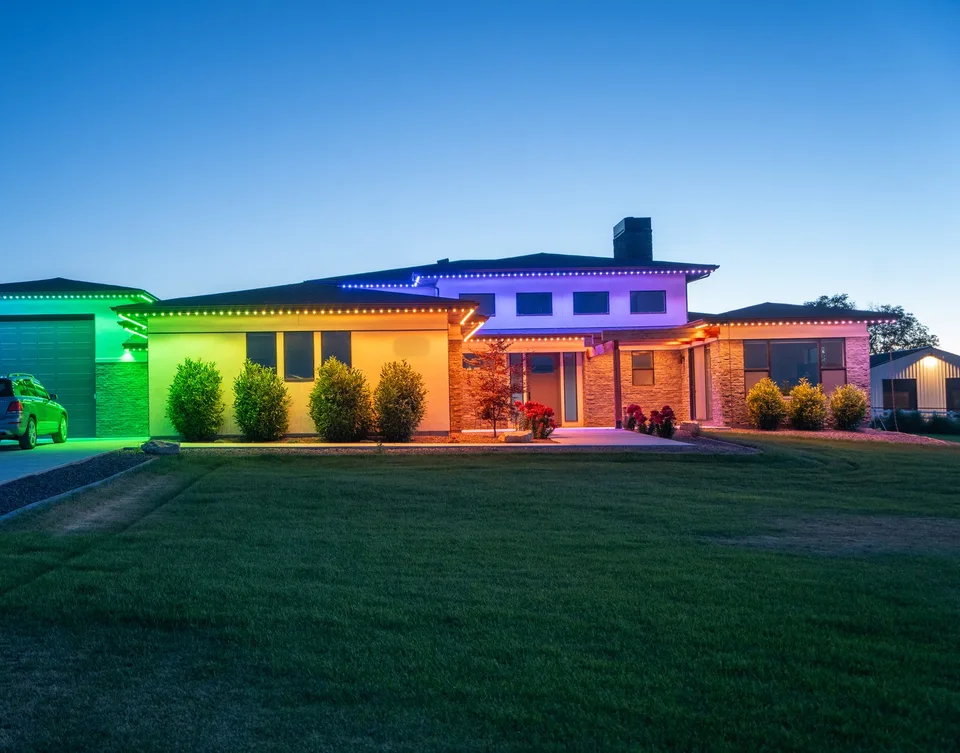
Same roofline, same lights, six settings. Press any of them, or sit back and let it play through once. Every one of these is a few taps away on your phone on any evening you like.


Choose a state
Six looks, one set of lights, and not one of them needed anything added to the house.
The sky shifts a little from state to state because these are six photographs across one dusk, not one picture tinted six ways. The camera did not move between them, and neither did anything on the roof.
Want to see your kind of scheme before anybody comes out? You can build one yourself on the configurator.
It does not have to pick one
The same house can run every color at once. It is not an everyday look and it is not meant to be, but it is the clearest picture of what you are buying: every color on this page, and the millions between them, out of one line of lights.
The color can change along one run
Every light on the line is set on its own, so one run can fade across a gable, alternate light by light, or hold a single color end to end. That is the difference between lights that change color and lights you can actually design with.
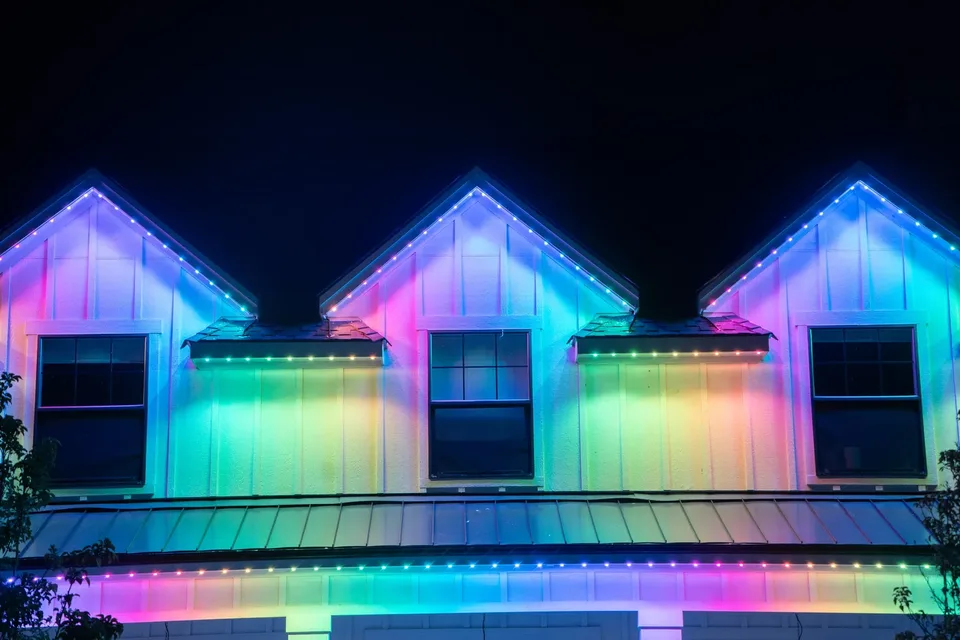
Same house, same eaves, same lights in both of these: alternating in the first and holding one color in the second.
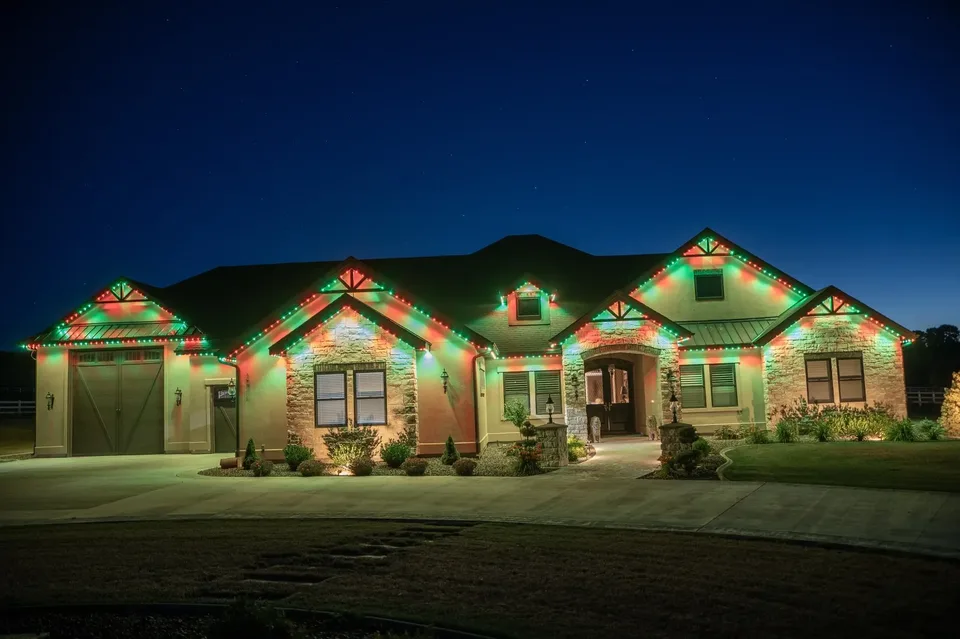
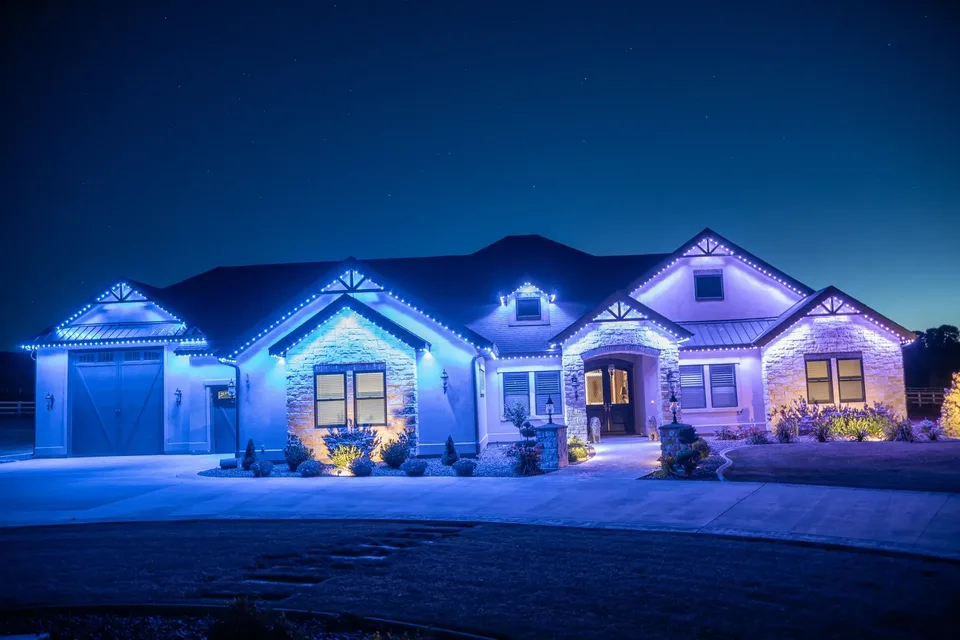
Different colors on different parts of the house
Group the runs and set each group on its own: the garage wing one color, the main roof another, the entry left warm white so your front door still looks like a front door. Where the groups fall is worked out on your house when the system is set up, and you can change any of them from the app afterwards.
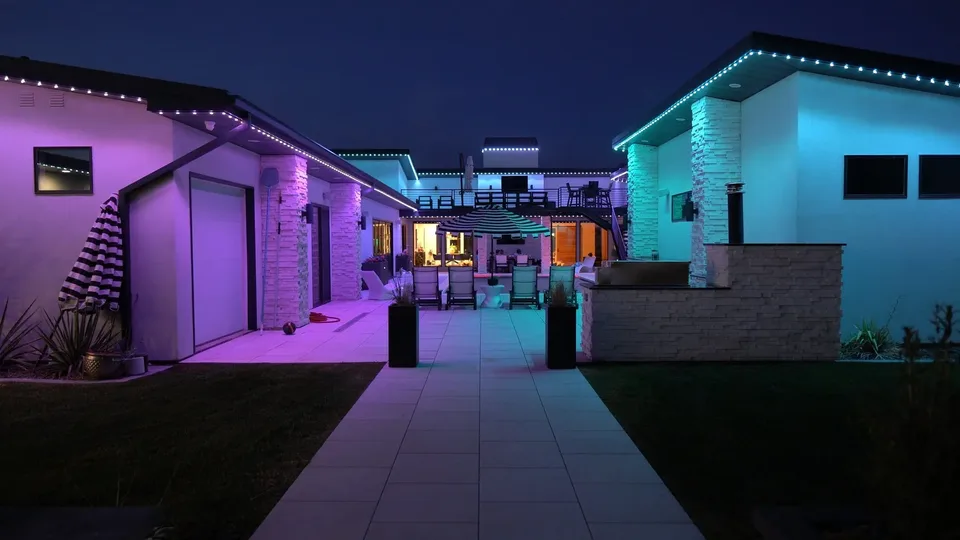
Chosen as a set and lit plane by plane, three colors read from the street as one deliberate scheme rather than three colors arguing.
It is also how a holiday works without the whole house shouting: two colors on the roof, the stone left warm, and the entry doing its normal job.
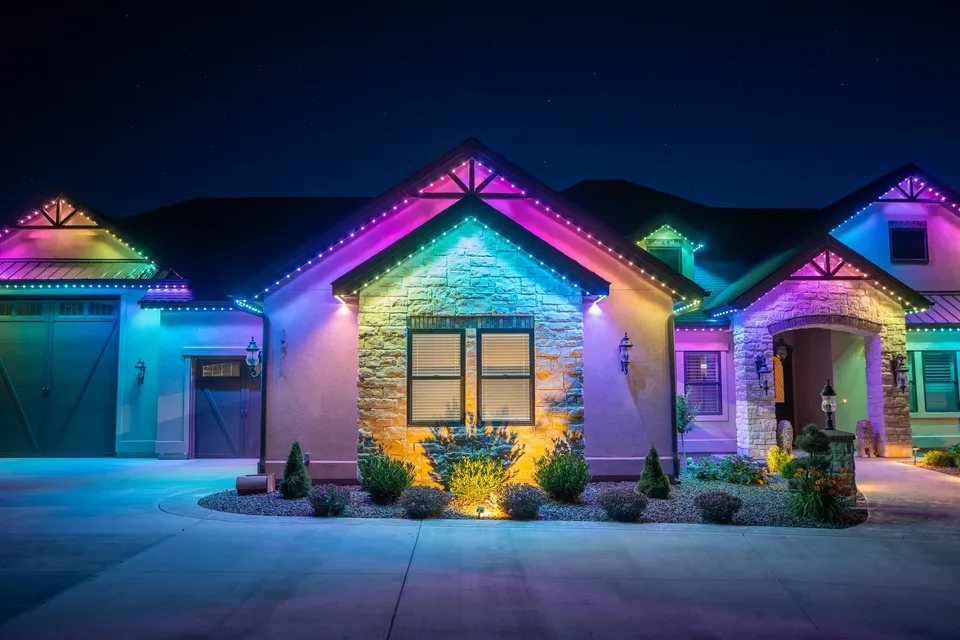
A scheme is not a commitment either
Same house, same spot, two nights: a mixed scheme with the gables and the porch doing different things, then one violet across everything. The busy one is no harder to set than the simple one, and going back costs you nothing.
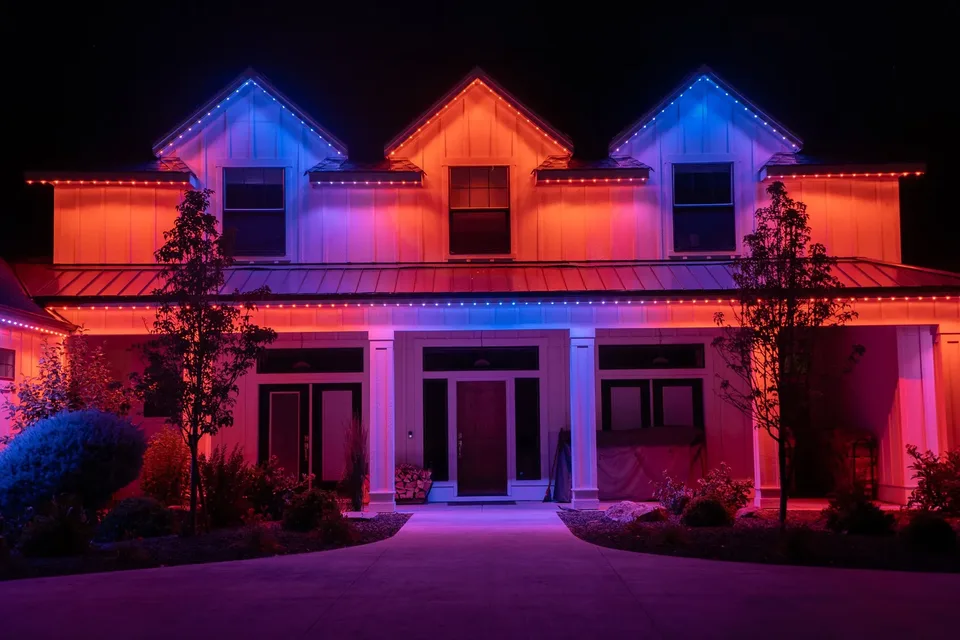
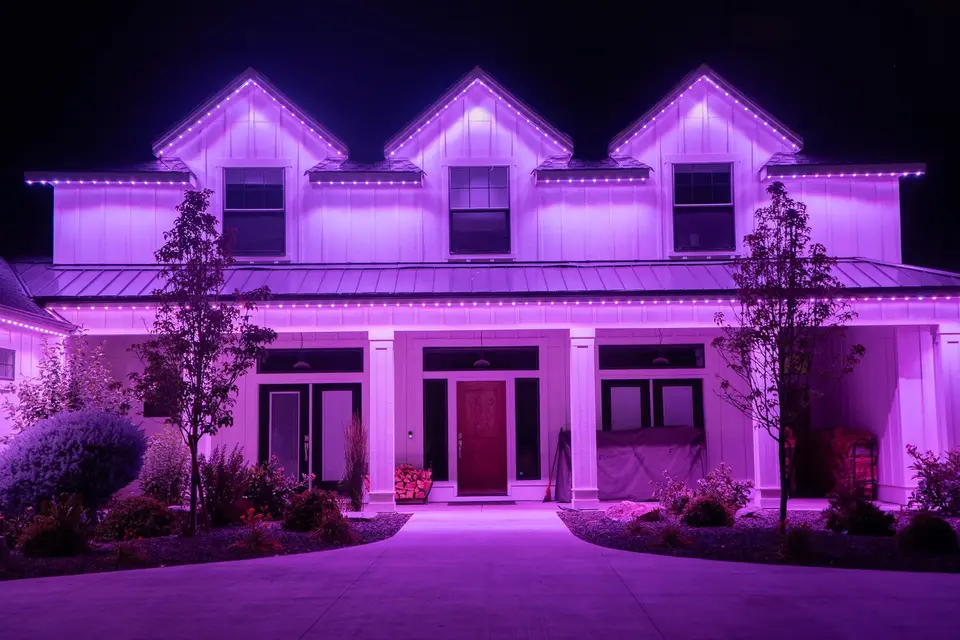
Pick a palette
Try the full scheme on a Friday and a single color on Saturday. Neither one asks anything of you but the choice.
Bold is one evening, not a commitment
Strong color gets a bad name because most of it is done badly. On clean lines, with the light washing the building instead of pointing at the street, it reads as intent. These two are the same entry from the same spot on two different nights.
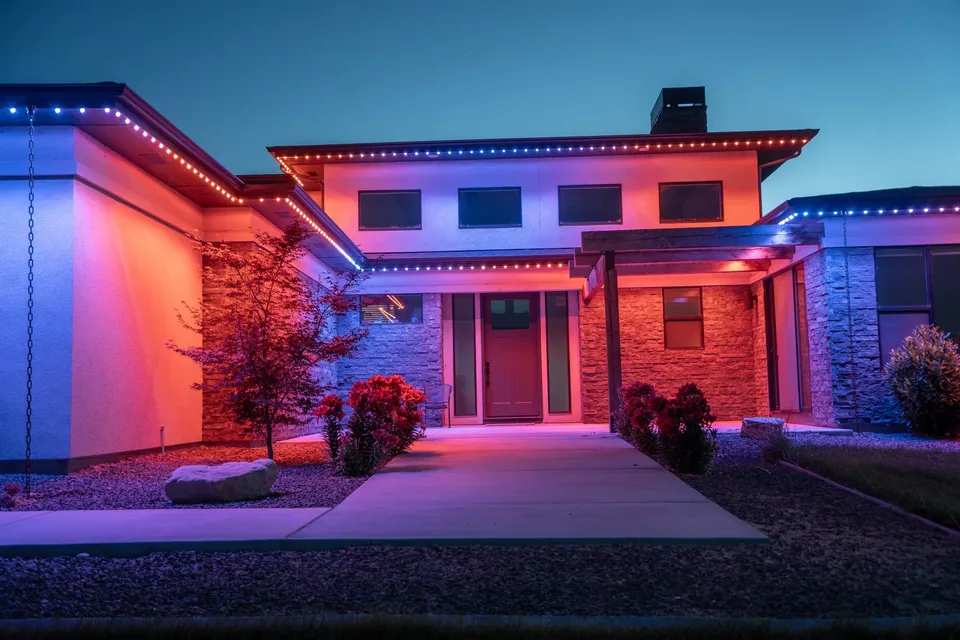
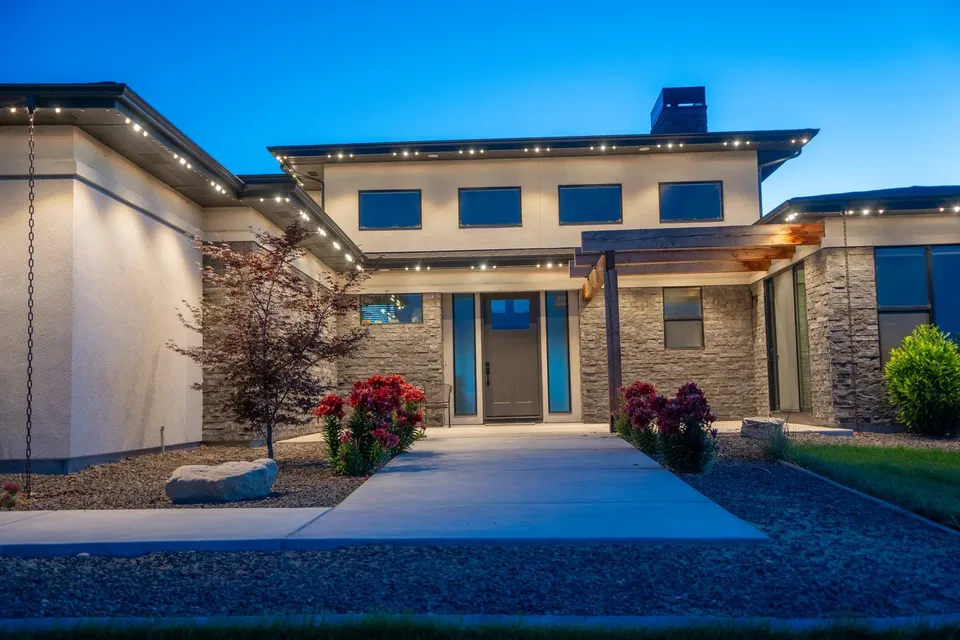
If what you are picturing is a permanent carnival, relax. The loud look is a setting, and it goes away the moment you stop choosing it.
A single color across a whole elevation is the safest way in: it reads as one decision rather than as decoration. The FAQ answers the blunt version under will it look tacky.
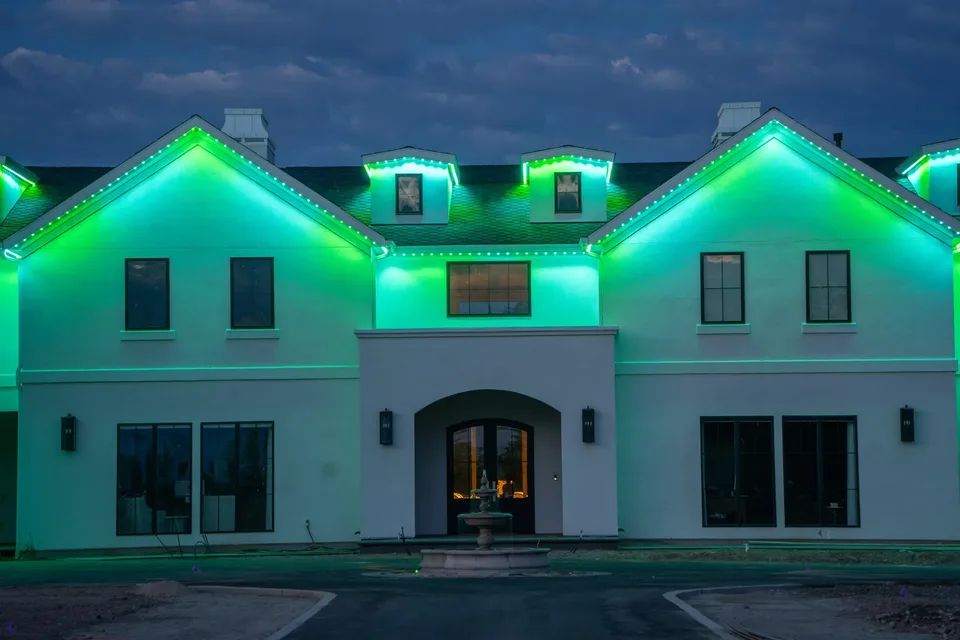
And then most nights it is just this
Every picture above is from across a lawn, which is where a scheme gets judged. This is the distance you actually live at: walking up to your own front door on an ordinary evening.
Every holiday, from the lights already on your roof
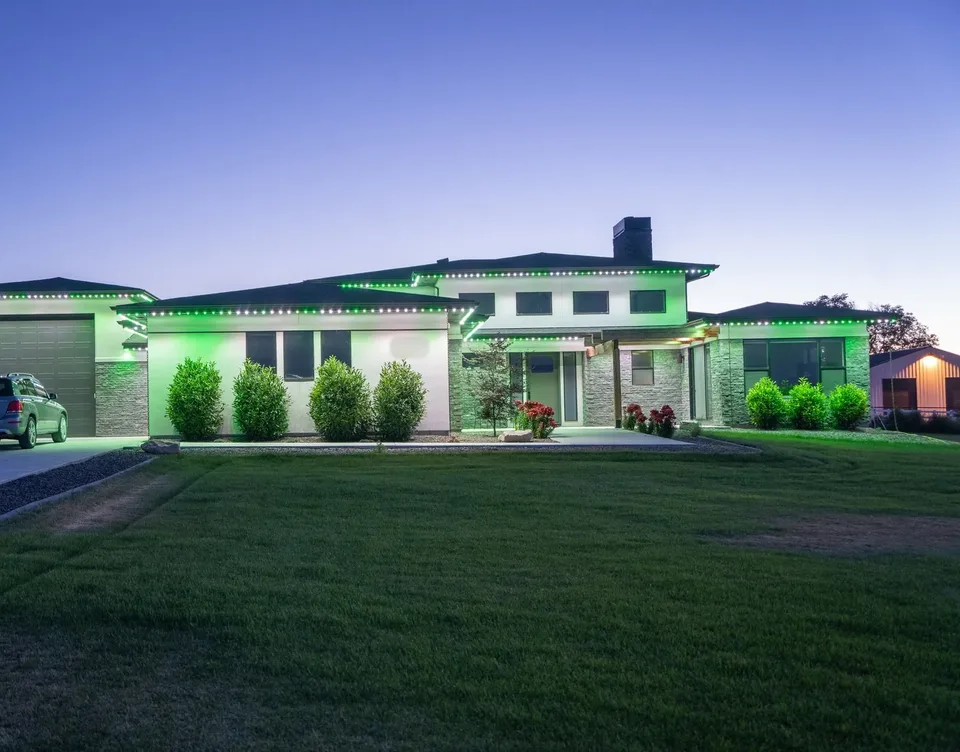
No ladder, no box in the garage, no second set of lights. Every palette on this list comes out of the same lights you run warm white on: pick it on the night, or schedule it once and let it take care of itself.
- Valentine's DayRed and pink
- St Patrick's DayTwo greens
- EasterPastels
- Fourth of JulyRed, white and blue
- HalloweenOrange and purple
- ThanksgivingAmber, rust and brown
- HanukkahBlue and white
- ChristmasRed and greenSee the Christmas page
- New Year's EveWhite, then color at midnight
Christmas has a page of its own with pictures to match. The argument is the same: the lights are already up, so a holiday only costs you the choosing. A team's two colors work the same way, on the game day page. See the Halloween and Thanksgiving colors, and the green for Veterans Day.
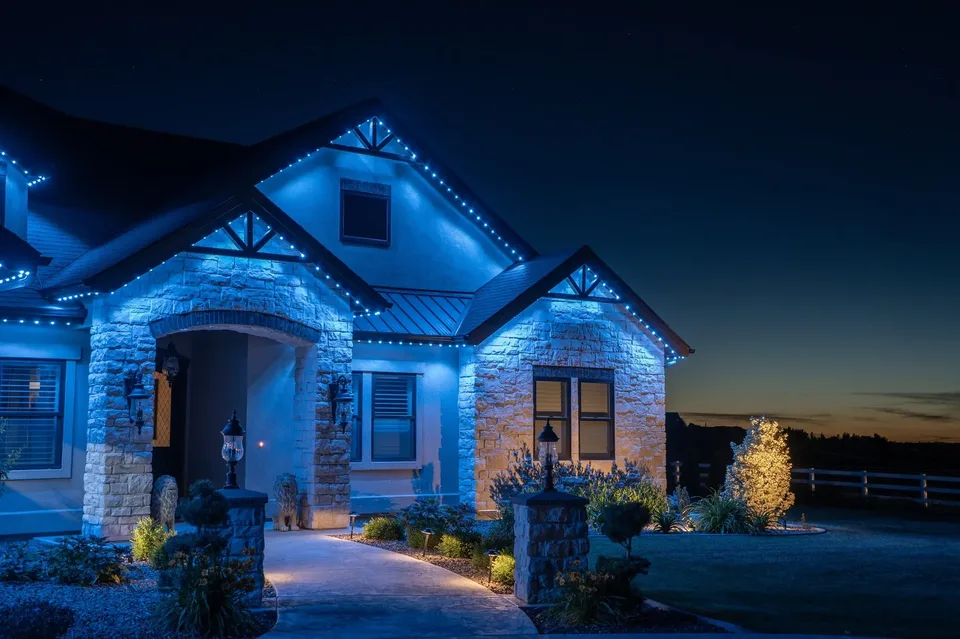
Pick the color on your own roofline
Every picture on this page is the same kind of system, set differently on a different evening. The only real decision is whether you want those lines on your house, and the estimate is free. Tell us about the house and the installers will work out the rest.
- Licensed, insured and certified installers
- Controller included with every install, and our installers program it for you
- Backed by the manufacturer's 5-year product warranty and our installers' workmanship warranty
If the next question is what it costs, that page walks through what moves the price on a house like yours.