A permanent light kit you install yourself, or one somebody installs for you
DIY permanent Christmas lights and a professionally installed system are aimed at the same result: no more boxes in the attic, no more ladder every November. How you get there is the real decision, and it comes down to what actually goes on the roofline, who puts it there, and what happens if a piece of it comes loose two winters in.
Still weighing permanent against putting lights up every winter in the first place? That comparison has its own page, and this one picks up from where it leaves off, once permanent is already the answer.
How each one actually gets fixed to the house
A kit like Govee's Permanent Outdoor Lights Pro mounts with an adhesive and a set of clips, pressed under the eave one fixture at a time, and Govee's own product page puts the install at about eight seconds per light.
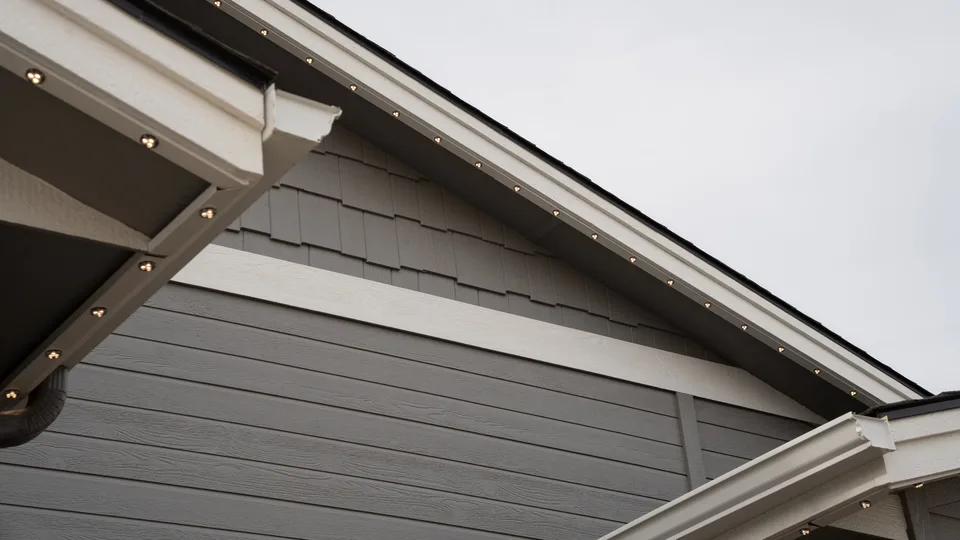
Our system goes up differently. It runs inside a color-matched aluminum track, mounted along the fascia or the soffit, so the hardware sits ahead of the roofline instead of stuck to the underside of it.
Govee's own installation guide puts most homes at two to four hours, depending on the length of the run and the surface it mounts to.
The same guide says to have the power source ready before the first light goes up, which matters on a house with no outlet near the eaves: one Best Buy shopper asked whether the cord could be extended because the outlets sat about 30 feet from the eaves.
If you are looking for a DIY Trimlight kit, the company's own site headlines its system as "Professionally Installed, Not DIY".
What the track looks like once it is up, and how it mounts along a real roofline, is laid out on our system page.
If a professional install is the way you are leaning, how a professional install works takes it step by step.
What holds up, and what to watch on a DIY install
A commonly reported issue with an adhesive-mounted kit is the adhesive itself. The maker of a free replacement mounting bracket built it because, in their words, a lot of people have issues with the 3M tape on these lights, and the adhesive doesn't seem to last, possibly down to dirt or temperature.
Govee's own installation guide has the installer clean the wall first to ensure a safe stick, then hold each light against it for at least five seconds after pulling off the VHB backing. Both steps are done once, by hand, and the adhesive and clips are then left to hold.
None of that means every adhesive-mounted install fails. It is a documented pattern worth knowing about before you are the one back up there mid-winter pressing a sagging section back into place.
Our system does not lean on adhesive to carry the fixture at all. The track fastens mechanically along the fascia or the soffit, every component in it is UL rated, and what happens if one still fails is settled before you ever need it.
Each light is rated for roughly 50,000 hours of use on its brightest setting, and what that rating includes is laid out in full on our coverage page.
What you actually control, and how bright it gets
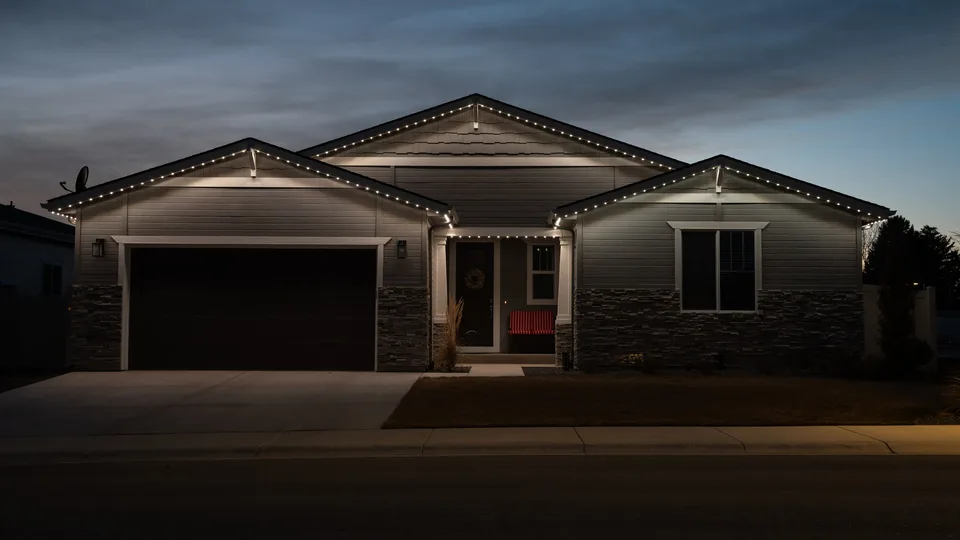
Each light in our system puts out 72 lumens, among the brightest permanent lights made.
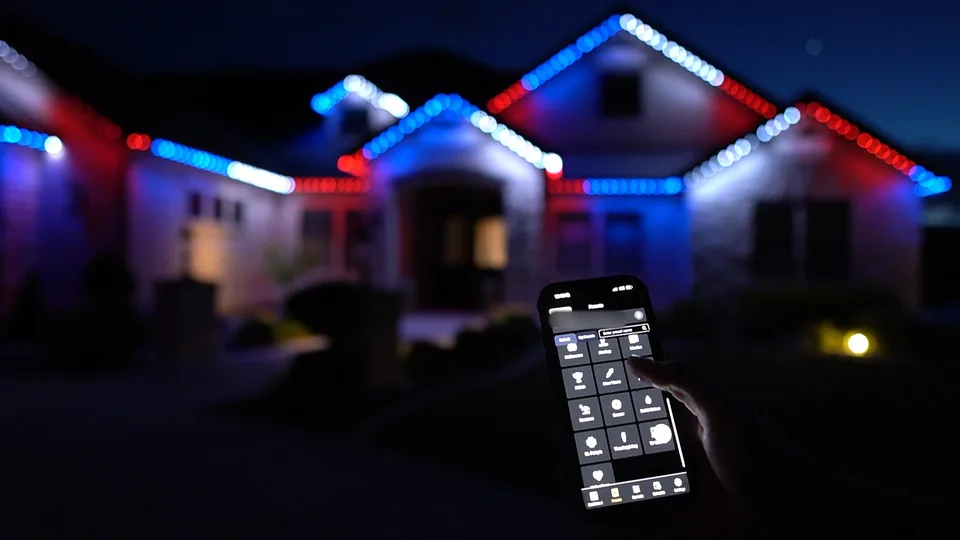
There is no monthly fee and no annual fee to run it. The power it draws is a separate, small number, and the kWh tables for a Nashville roofline show it for 100, 150 and 200 ft. Control comes from a free app that also connects to Amazon Alexa, Google Assistant, Siri, and Control4, and every scene, schedule, and integration it supports is covered in full on our app control page.
Music sync runs off your phone's own microphone, with nothing extra to plug in, and geofencing can bring the house up or down as you arrive or leave, without anybody touching a switch.
Which one actually fits your house
Is a self-install kit actually a fair choice for some houses?
Yes. It fits a renter or anyone planning to move in the next couple of years, a single-story home with an eave you can reach without a tall ladder, a budget that has to stay small, and an owner who does not mind climbing up once in a while to re-seat a clip or press an adhesive strip back down.
When does paying for a professional install make more sense?
On a taller or more complicated roofline, where working off a ladder gets riskier the higher it goes. For an owner planning to stay several years or more, who would rather not be the one troubleshooting a mounting problem later. And for anyone who wants the track concealed under the roofline by day, rather than a strand of fixtures visible along the fascia.
Decide it once, either way
Whichever way you go, a permanent system means no more boxes in the attic and no more ladder every November. If you want the number for having it done, tell us about the house.
Licensed, insured and certified installers on every job we take.